
Freestyle Technique Guide
Most freestyle swimmers do not get stuck because they are not trying hard enough. They get stuck because small technique mistakes create drag, waste energy, break breathing rhythm and make every length feel harder than it should.
This guide explains the most common freestyle technique mistakes, how to spot them, why they slow you down, and which drills help fix each problem. Use it as a practical checklist before your next pool session.
This article contains affiliate links. As an Amazon Associate, BestSwimGoggles.com may earn from qualifying purchases. This does not change the price you pay and does not control our editorial recommendations.
Quick Answer: What Are the Most Common Freestyle Mistakes?
The most common freestyle technique mistakes are sinking hips and legs, crossing over on hand entry, lifting the head to breathe, dropping the elbow during the pull, kicking from the knees, losing core stability, and overgliding between strokes. Most of these mistakes are connected: poor head position can sink the legs, poor breathing can ruin rotation, and a weak catch can force swimmers to kick harder than necessary.
Start by checking these seven areas:
- Head position: Are you looking forward instead of down?
- Body line: Are your hips and legs sinking?
- Hand entry: Are your hands crossing over the center line?
- Breathing: Are you lifting your head or holding your breath?
- Catch: Is your elbow dropping under your hand?
- Kick: Are you kicking from the knees with too much splash?
- Timing: Are you pausing too long between strokes?
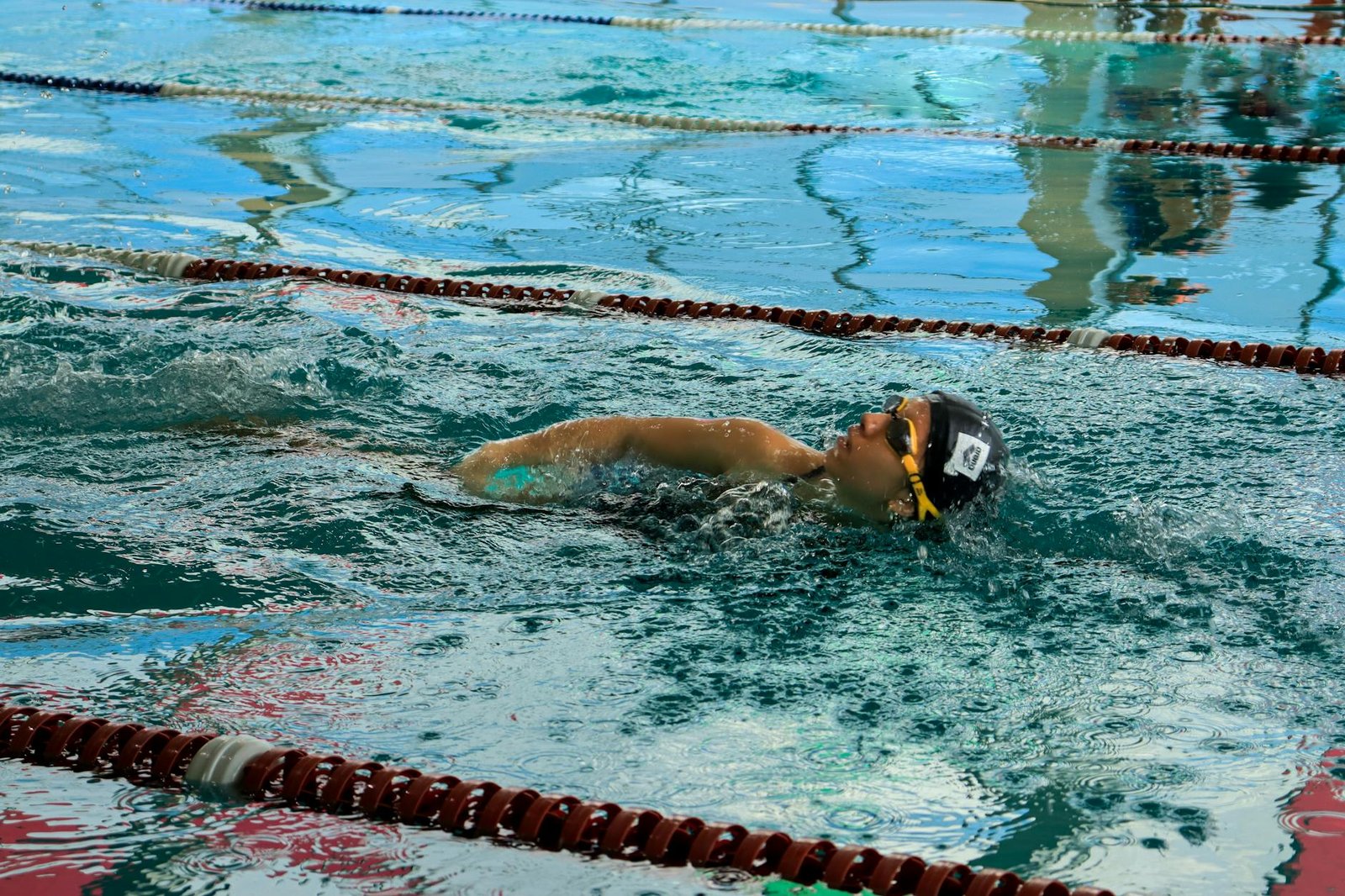
Freestyle Mistakes at a Glance
Use this table to identify the mistake, understand the cause, and choose the right correction drill.
| Mistake | What It Looks Like | Why It Slows You Down | Best Fix |
|---|---|---|---|
| Sinking hips and legs | Feet drag low behind the body | Creates extra drag | Neutral head position, core engagement, snorkel drills |
| Crossing over | Hand enters in front of the head or opposite shoulder | Makes the body snake side to side | Catch-up drill, shoulder-width entry |
| Lifting head to breathe | Face comes forward or high out of the water | Drops hips and breaks rhythm | Side kicking, one-goggle-in breathing |
| Dropped elbow catch | Elbow falls below the hand during the pull | Loses water pressure and propulsion | Sculling, closed-fist freestyle |
| Kicking from knees | Big splash, bent knees, little movement forward | Wastes energy and adds drag | Kick from hips, short flutter kick, fins drill |
| Weak core | Body wobbles or twists excessively | Leaks power and ruins alignment | Pull buoy, body-line drills, dryland core |
| Overgliding | Long pause at the front of each stroke | Kills rhythm and speed | Tempo work, 3-3-3 drill |
1. Sinking Hips and Legs
Sinking hips and legs are one of the biggest freestyle efficiency problems. When your lower body drops, your body becomes more vertical in the water and creates extra drag. You may feel like you are working hard but not moving forward smoothly.
Common Causes
- Looking forward instead of down.
- Holding the breath and becoming tense.
- Weak core engagement.
- Kicking too much from the knees.
- Poor body balance during breathing.
How to Fix It
- Look mostly down, not forward.
- Keep the neck relaxed and neutral.
- Exhale underwater to reduce tension.
- Engage your core like a light plank.
- Practice with a swim snorkel to focus on body line.
Your head is the steering wheel. If your head lifts, your hips usually drop.
2. Crossing Over on Hand Entry
Crossing over happens when your hand enters the water across the center line of your body. Instead of entering in front of the shoulder, the hand lands in front of the face or opposite shoulder. This can make your body snake, increase drag and put extra stress on the shoulder.
| How to spot it | Your body wiggles side to side, your hand enters in front of your head, or you feel one shoulder crossing inward. |
| Fix cue | Enter each hand in line with the same-side shoulder, as if you are swimming on two train tracks. |
| Best drills | Catch-up freestyle, fingertip drag, single-arm freestyle. |
Do not make the entry too wide either. The goal is shoulder-width entry, not an exaggerated wide swing.
3. Breathing Too Late or Lifting the Head
Breathing mistakes are often the reason freestyle feels exhausting. If you hold your breath underwater, lift your head to inhale, or turn too late, your rhythm breaks and your legs drop.
Signs You Are Breathing Poorly
- You feel out of breath after one length.
- You lift your face forward to breathe.
- Your hips drop every time you inhale.
- You gasp instead of taking a calm breath.
- You hold your breath underwater.
Better Breathing Cues
- Exhale steadily underwater.
- Rotate to breathe, do not lift.
- Keep one goggle partly in the water.
- Inhale quickly through the mouth.
- Return your face before the stroke falls apart.
For a deeper breakdown, read our guide to swimming breathing techniques.
4. Dropped Elbow During the Pull
A dropped elbow is one of the most common freestyle pull mistakes. It happens when your elbow falls below your hand early in the pull, causing you to push water downward instead of backward.
| Bad Catch | Better Catch |
|---|---|
| Elbow drops under the hand | Elbow stays higher as forearm angles down |
| Pushes water downward | Holds water and presses backward |
| Feels like slipping through water | Feels like gripping the water |
| Requires more kicking to compensate | Creates better propulsion with less effort |
Best drills for a better catch:
- Sculling drill.
- Closed-fist freestyle.
- Single-arm freestyle.
- Pull buoy with slow catch focus.
- Light paddle work for experienced swimmers.
5. Kicking From the Knees
A good freestyle kick is narrow, steady and starts from the hips. Kicking mostly from the knees creates splash but not much propulsion. It also increases drag because the knees drop below the body line.
Incorrect Kick
- Large knee bend.
- Big splash at the surface.
- Feet kick downward like pedaling a bike.
- Legs feel tired quickly.
- Little forward movement.
Better Kick
- Small flutter from the hips.
- Relaxed ankles.
- Feet stay close to body line.
- Light, steady rhythm.
- Kick supports balance instead of fighting drag.
Vertical kicking, back kicking and short fin sets can help you feel a cleaner kick pattern.
6. Weak Core Engagement
Freestyle is not just arms and legs. Your core connects the stroke together. If your core is loose, your body may wobble, your hips may swing, and your kick may work harder than necessary.
How to improve freestyle core stability:
- Practice streamline push-offs.
- Use pull buoy sets while keeping hips stable.
- Add side kicking drills for body-line control.
- Do simple dryland planks and side planks.
- Keep the ribs, hips and head aligned while swimming.
Think of your body as one long vessel. The less it wiggles, the less energy you waste.
7. Overgliding or Pausing Between Strokes
Some swimmers overcorrect after learning technique drills. They reach forward, pause too long, then restart the stroke from a dead spot. This can feel smooth at first, but it often kills rhythm and speed.
| How it feels | Long glide, slow rhythm, dead spots between strokes. |
| Why it hurts speed | You lose momentum and have to restart with each pull. |
| Best fix | Use tempo work, 3-3-3 drill, or short controlled intervals. |
Overgliding is different from swimming long. Good freestyle has reach and rhythm. It does not pause so long that the body stalls.
Best Drills to Fix Freestyle Mistakes
These drills match the most common freestyle problems and are easy to add to your warm-up or technique set.
| Drill | Best For | How to Use It |
|---|---|---|
| Catch-up freestyle | Entry control and timing | 4 x 25 drill, then 4 x 25 normal swim |
| Side kicking | Balance and breathing | 4 x 25 alternating sides |
| 6-kick switch | Rotation and body position | 6 kicks on one side, switch, repeat |
| Sculling | Catch feel | 4 x 25 slow and controlled |
| Closed-fist freestyle | Forearm catch awareness | 25 fist drill + 25 normal swim |
| 3-3-3 drill | Rhythm and timing | 3 right arm, 3 left arm, 3 full strokes |
For more drill options, see our guide to the top 10 swim drills.
Sample Freestyle Technique Fix Workout
Use this session once a week when you want to fix technique instead of only building fitness.
| Warm-up | 200 easy freestyle, relaxed breathing |
| Body position | 4 x 25 side kicking, rest 15 seconds |
| Entry control | 4 x 25 catch-up freestyle |
| Catch feel | 4 x 25 sculling or closed-fist freestyle |
| Full stroke | 6 x 50 freestyle, focus on one correction only |
| Cool-down | 100 easy swim or backstroke |
Do not try to fix every mistake in one session. Pick one technique focus and repeat it until it feels natural.
Helpful Gear for Fixing Freestyle Technique
Gear does not replace good technique, but it can help isolate one skill at a time.
| Gear | Helps With | Check Gear |
|---|---|---|
| Anti-fog swim goggles | Clear head position and less interruption during drills | Check Goggles |
| Swim snorkel | Body position, head alignment and catch work without breathing interruption | Check Snorkels |
| Pull buoy | Upper-body focus, catch mechanics and body line | Check Pull Buoys |
| Training fins | Side kicking, body balance and rotation drills | Check Fins |
| Swim paddles | Advanced catch awareness and pull strength | Check Paddles |
Frequently Asked Questions
What is the most common freestyle technique mistake?
One of the most common freestyle mistakes is lifting the head, which often causes sinking hips and poor body position. Breath holding and poor rotation usually make the problem worse.
Why do my legs sink in freestyle?
Your legs may sink because your head is too high, your core is not engaged, you are holding your breath, or your kick is creating drag instead of supporting body position.
How do I stop crossing over in freestyle?
Focus on entering each hand in front of the same-side shoulder. Catch-up freestyle, fingertip drag and single-arm freestyle can help build better entry awareness.
How do I fix a dropped elbow in freestyle?
Practice sculling, closed-fist freestyle and slow pull-buoy sets. The goal is to feel pressure on the forearm and press water backward instead of downward.
Is overgliding bad in freestyle?
Overgliding can be bad if it creates a long pause and kills your rhythm. A good freestyle stroke should be long but still continuous.
How often should I work on freestyle technique?
Most swimmers should include technique work in every swim, even if it is only 10 to 15 minutes during warm-up. Short, focused practice is better than long unfocused drills.
Final Takeaway
Freestyle becomes easier when you remove drag before adding more effort. Start with body position and breathing, then fix hand entry, catch, kick, core stability and rhythm.
Pick one mistake at a time, use the right drill, and then swim a normal length while carrying the correction into your full stroke. That is how technique work turns into faster, smoother swimming.
