
Swim goggles nose bridge fit guide
Most swimmers blame the strap when goggles leak near the nose. But the tiny bridge between the lenses often decides whether the cups settle naturally or spend the whole swim fighting your face.
Affiliate disclosure: This guide includes a few Amazon affiliate links to goggles that may be worth comparing for different fit problems. If you buy through those links, we may earn a small commission at no extra cost to you.
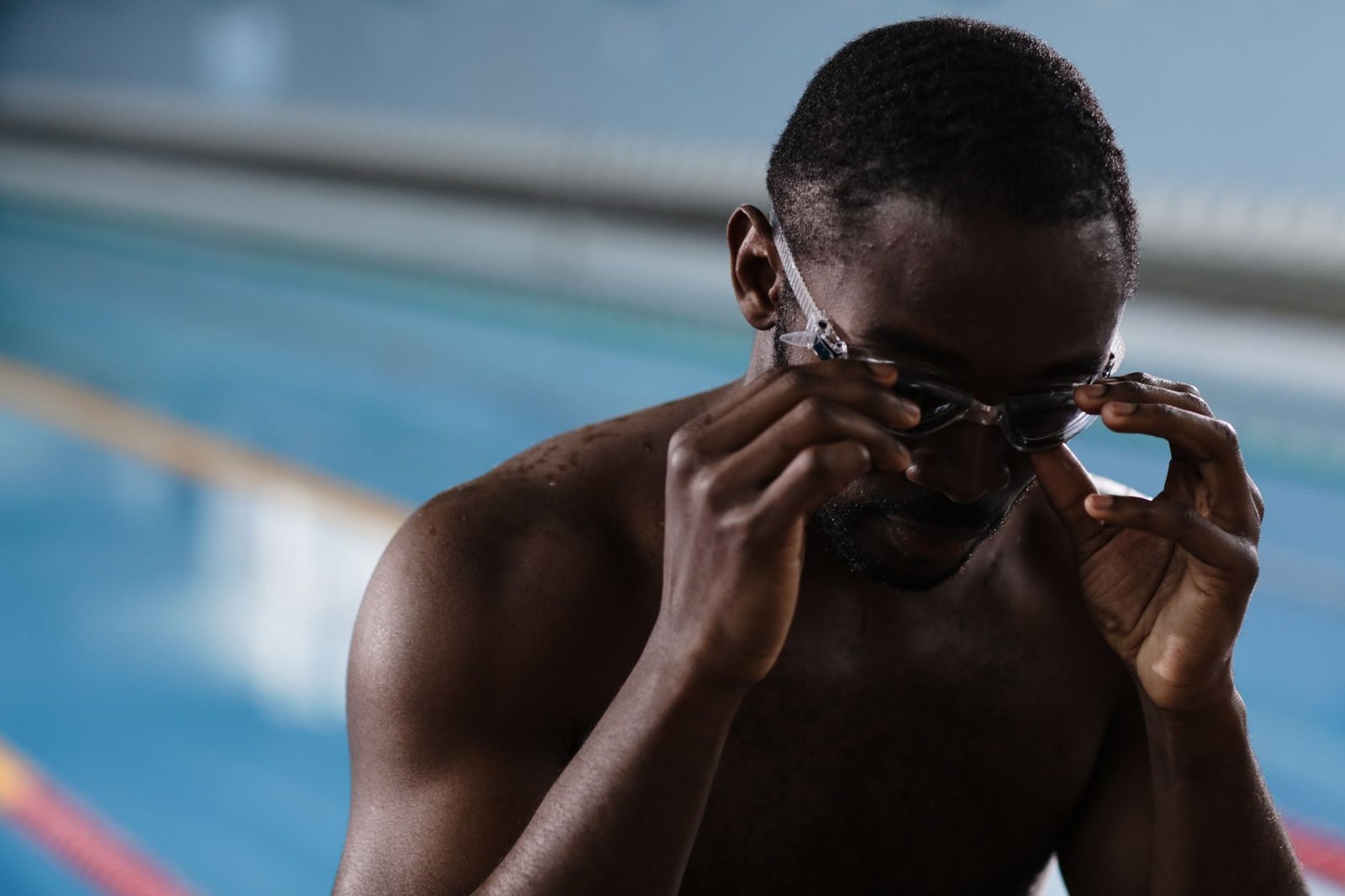
The first sign is usually small. You press the goggles into place, pull the strap over your cap, and the left lens feels fine. The right lens does not. Or both lenses feel sealed for the first push-off, then a thin line of water slips in near the nose by the second length.
Most swimmers respond the same way: they tighten the strap. It works for a few minutes, but the pressure moves somewhere else. The inner corners dig in. The bridge of the nose feels pinched. After the swim, the marks around the eyes look sharper than they should.
That is why nose bridge fit matters. The bridge sets the spacing and angle of the lenses. If that spacing is wrong, the gasket is not landing where your face wants it to land. The strap can hold a good fit in place, but it cannot turn the wrong frame shape into the right one.
The small part that changes the whole fit
The nose bridge does not look important when you are comparing goggles online. Lens color gets the attention. Anti-fog claims get the attention. Mirrored lenses look faster in the product photo. But the bridge quietly decides whether each cup sits around the eye socket or presses into the wrong part of your face.
When the bridge is too narrow, the cups are pulled inward. You may feel a pinch near the nose, or the outer edges may feel unstable. When the bridge is too wide, the cups can sit too far apart and leave a small gap at the inner corner. The strange part is that both problems can look the same once you are swimming: water sneaks in, and you start blaming the strap.
If your goggles only seal when the strap feels painful, you are not fine-tuning the fit anymore. You are forcing the frame to behave.
This is also why the same pair can be perfect for one swimmer and miserable for another. It is not always about quality. Sometimes it is just face geometry.
How a bad bridge fit feels in the water
A poor bridge fit usually shows up in one of three ways. The most common is the inner-corner leak. The water does not flood in all at once; it sneaks in from the side closest to the nose after a push-off, breath, turn, or dive.
The second sign is early pressure. The goggles feel uncomfortable before the workout has even started. That is not a normal “breaking in” feeling. If the frame pinches while you are standing dry on the pool deck, it will not magically become comfortable during a 2,000-yard swim.
The third sign is the one-sided fit. One lens feels clean and settled while the other feels twisted, lifted, or never quite aligned. In that case, do not assume your face is the problem. The bridge or cup shape may simply be asking your face to fit a shape it does not have.
The one-minute mirror test
Before you judge a pair of goggles, test the bridge without letting the strap do all the work. Stand in front of a mirror with dry skin and dry goggles. Place the cups gently around your eyes without pulling the strap over your head.
You are not trying to create a dramatic suction mark. You are looking for even contact. The gasket should touch around both eyes without a sharp pinch near the nose and without a visible gap at the inner corners. Then tilt your head slightly down and up. Turn a little left and right. If one cup lifts immediately, the shape is probably not matching your face.
Only after that should you add the strap. Tighten it just enough to hold the fit you already found. If the strap has to create the entire seal, the bridge has not done its job.
Goggles worth comparing if bridge fit keeps causing trouble
There is no single goggle that solves every nose bridge problem, but there are a few categories worth comparing depending on what you feel on your face. Treat these as starting points, not automatic answers.
Speedo Vanquisher 2.0A familiar training and meet option to compare if you want a smaller, more performance-style frame with bridge-size options. It can work well for swimmers who want structure without going fully into a harsh racing fit.
Arena Cobra-style racing gogglesWorth comparing if you like a low-profile race feel and need to experiment with bridge spacing. These are not comfort-first goggles, so the mirror test matters before you trust them for a meet.
Aqua Sphere Kayenne-style comfort gogglesA better direction for swimmers who feel boxed in by narrow racing frames or want a more forgiving seal for longer swims. The tradeoff is a larger profile, which some competitive swimmers may not want for starts and turns.
Soft-gasket kids gogglesFor children, comfort usually matters more than a fast-looking frame. If a child says the goggles hurt before the lesson starts, compare softer gasket options before tightening the strap again.
Three real fit problems I would check first
The leak that starts near the nose
If the leak always begins at the inner corner, do not start by cranking down the strap. Press the goggles gently into place and look at where the inner gasket lands. If the cups sit too far apart, a narrower bridge may help. If the bridge is fixed and the same leak returns every swim, the frame may simply be too wide for your face.
The racing pair that feels fast but punishing
Racing goggles are supposed to feel secure. They are not supposed to make you count the minutes until you can take them off. A bridge that is slightly wrong on a soft practice goggle can feel brutal on a low-profile race frame. Test every bridge size in warm-up and during pace work, not just at home.
The child who keeps pulling the goggles away
With kids, bridge fit problems often get mistaken for fussiness. The goggles pinch, the child pulls them away, the parent tightens the strap, and the lesson starts badly. If a child complains before getting wet, assume the fit is worth checking before you assume they are resisting the lesson.
Adjustable bridge or fixed bridge?
Fixed-bridge goggles can be excellent when the frame happens to match your face. Many comfort goggles use a molded or flexible bridge that works well for a wide range of swimmers. The weakness is simple: if the spacing is wrong, there is not much to adjust.
Interchangeable bridges give you more control. They are common on racing and performance goggles because small spacing changes can make a big difference. The mistake is leaving the spare bridge pieces in the box. Try them in the water. The bridge that looks right on the counter is not always the one that feels right after ten hard 50s.
Swedish-style goggles are their own world. They can be customized closely, but the fit is less forgiving. Some swimmers love that direct feel. Others want a soft gasket to do more of the comfort work. Neither choice is wrong. It depends on your face, your tolerance for pressure, and whether the goggles are for daily laps or race day.
When to adjust and when to move on
Adjust the bridge when the goggles are close to working. Maybe the seal is good except near one inner corner. Maybe one bridge size pinches and the next size feels calmer. Maybe the cups sit evenly only after a small spacing change. Those are useful experiments.
Move on when every version hurts in the same place, when the goggles only seal with painful strap tension, or when the cups land on bone instead of around the eye socket. At that point, more adjusting usually creates a new problem. A different frame shape will do more than another notch tighter on the strap.
Also move on if the gasket has become stiff, cracked, or permanently flattened. A perfect bridge cannot save an old seal forever. If the same pair used to work and now leaks no matter what you do, age may be the real issue.
Not sure which swim goggles are right for you?
Answer a few quick questions about your swim style, face fit, lens needs, and budget. Get matched with goggles that make sense for how you actually swim.
