
Sprint Freestyle Dryland + Gear Guide
Dryland training for sprint freestyle should build explosive starts, faster turns, stronger pull mechanics, stable core control and quick kick rhythm. The goal is not to get tired in the gym—it is to transfer power back into the pool.
This guide gives swimmers a practical dryland framework, sample weekly plan, exercise choices and gear recommendations that support sprint freestyle without adding unnecessary complexity.
This article contains affiliate links. As an Amazon Associate, BestSwimGoggles.com may earn from qualifying purchases. This does not change the price you pay and does not control our editorial recommendations.
Train lower-body power for blocks and push-offs.
Build fast wall contact and strong streamline control.
Strengthen lats, shoulders and core without overloading joints.
Improve ankle rhythm, trunk stiffness and sprint kick timing.
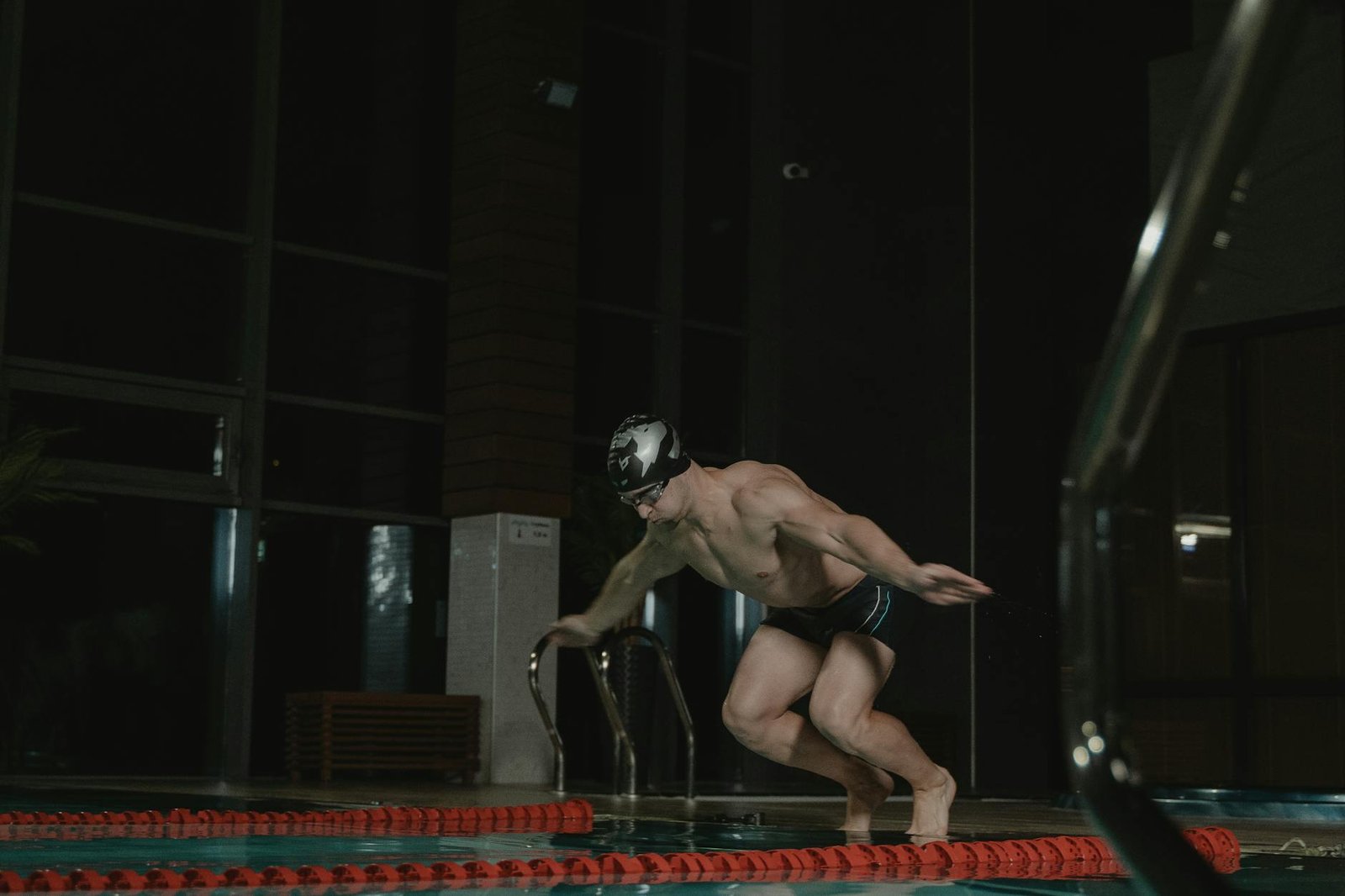
Quick Answer: What Dryland Training Helps Sprint Freestyle Most?
The most useful dryland training for sprint freestyle combines plyometric jumps, squats or split squats, medicine ball throws, core bracing, pull-up or band-pull work, shoulder stability and short ankle-rhythm drills like jump rope. The best gear is simple: resistance bands, a medicine ball, exercise mat, jump rope and optional plyo box.
Sprint Dryland Formula
Faster sprint freestyle = power + stiffness + core transfer + shoulder control + pool-specific timing
What Sprint Freestyle Needs From Dryland
Sprint freestyle is a high-power race. Dryland should support the most important parts of a short race: the start, breakout, first 15 meters, turn, second breakout and final sprint rhythm.
Explosive legs
Help starts, turns and push-offs feel sharper.
Core stiffness
Lets power transfer from kick and pull without body collapse.
Pull strength
Supports a strong catch and fast stroke rate.
Shoulder control
Helps sprinters train speed without creating sloppy arm mechanics.
Best Dryland Exercises for Sprint Freestyle
| Exercise | Best Transfer | Starter Dose | Helpful Gear |
|---|---|---|---|
| Squat jumps | Start and wall power | 4 x 3–5 quality jumps | Exercise mat |
| Box jumps | Explosive legs and landing control | 3 x 3–5 controlled reps | Plyo box |
| Medicine ball slams | Total-body power and trunk snap | 4 x 5 explosive throws | Medicine ball |
| Band rows | Pull strength and shoulder balance | 3 x 10–12 controlled reps | Resistance bands |
| Plank variations | Core transfer and streamline control | 4 x 20–40 seconds | Exercise mat |
| Jump rope | Ankle rhythm and elastic stiffness | 6 x 30 seconds easy-fast | Jump rope |
Gear That Actually Helps Sprint Freestyle Dryland
You do not need a full gym to build sprint-specific dryland. Start with tools that create high transfer and low setup time.
| Gear | Why It Helps | Best For | Check |
|---|---|---|---|
| Resistance bands | Rows, shoulder stability, activation and warm-up | All swimmers | Check |
| Medicine ball | Explosive throws, slams and rotational power | Sprint power | Check |
| Jump rope | Fast feet, ankle rhythm and quick warm-up | Starts and dryland prep | Check |
| Exercise mat | Core work, mobility and floor-based strength | Home dryland | Check |
| Plyo box | Box jumps and landing control | Intermediate and advanced swimmers | Check |
| Pull-up bar | Upper-body pulling strength | Advanced dryland strength | Check |
1. Power Training for Starts and Turns
Sprint freestyle rewards swimmers who can produce force quickly. Squat jumps, box jumps and short broad jumps can help, but only when they are done with good landing mechanics and enough rest.
Do
- Keep jump reps low and powerful.
- Land quietly with knees tracking over toes.
- Rest enough to repeat high-quality reps.
- Stop if jump height drops sharply.
Do not
- Turn power training into conditioning.
- Do high-impact jumps when exhausted.
- Use a high box before mastering landing.
- Ignore knee, ankle or Achilles discomfort.
2. Core Training for Sprint Body Line
A sprinter needs a stiff, connected body line. If the core collapses, power from the kick and pull leaks away. Planks, dead bugs, hollow holds and anti-rotation band work are useful because they train control without unnecessary complexity.
Coach cue
Think “tight but not frozen.” The core should stabilize the body while the arms and legs move fast.
3. Pull Strength Without Shoulder Overload
Sprint freestyle needs a strong catch and fast pull, but dryland should not overload the shoulders with sloppy high-volume work. Focus on rows, controlled pull-ups, band external rotations and scapular control.
Warm up shoulders with light bands.
Use rows to build back strength.
Add pull-ups only if form is strong.
Balance pushing and pulling work.
4. Dryland Gear vs Pool Gear
Dryland gear builds strength and power, while pool gear helps transfer that strength into sprint mechanics. Keep both simple.
| Goal | Dryland Gear | Pool Gear |
|---|---|---|
| Pull power | Resistance bands, pull-up bar | Swim paddles |
| Stroke rate | Jump rope, medicine ball circuits | Tempo trainer |
| Race focus | Short explosive sets | Racing goggles |
| Starts and turns | Plyo box, squat jumps | Push-off and breakout practice |
Sample 25-Minute Sprint Freestyle Dryland Session
Use this once or twice per week. Do it before an easy swim session or away from your hardest pool workout so it does not ruin stroke quality.
3 minutes jump rope or dynamic mobility.
2 x 12 band rows and 2 x 10 band external rotations.
4 x 4 squat jumps or 3 x 4 box jumps with full rest.
3 rounds: 30 sec plank, 8 dead bugs per side, 20 sec hollow hold.
4 x 5 medicine ball slams or chest passes.
Light shoulder, hip flexor, calf and thoracic mobility.
How to Transfer Dryland to Sprint Freestyle
The biggest mistake is doing dryland without connecting it back to the water. After a dryland block, use short pool sets that emphasize the same qualities.
Start speed
Practice fast breakouts and first 6–8 strokes.
Turn power
Use explosive push-offs and tight streamlines.
Pull pressure
Use short paddle work or sculling to feel the catch.
Race rhythm
Use short sprint 12.5s or 25s with full recovery.
Common Mistakes
Training to exhaustion
Sprint dryland should build speed and power, not leave you too tired to swim well.
Too much heavy upper-body work
Shoulders need strength, but sloppy fatigue can harm sprint mechanics.
No landing control
Jumps are only useful if you can land safely and repeat good form.
Ignoring mobility
Power needs enough shoulder, hip and ankle mobility to transfer well.
Buying too much gear
Start with bands, mat, jump rope and medicine ball before adding more equipment.
No pool connection
Dryland gains must be rehearsed through starts, turns, breakouts and sprint sets.
Frequently Asked Questions
What is the best dryland training for sprint freestyle?
The best dryland training for sprint freestyle includes plyometric jumps, core bracing, medicine ball power work, resistance band pulling, shoulder stability and short rhythm drills like jump rope.
How often should sprinters do dryland training?
One to three short sessions per week can work, depending on training age and swim volume. Sprint dryland should support pool speed, not create constant fatigue.
What gear do swimmers need for dryland training?
Most swimmers can start with resistance bands, an exercise mat, jump rope and medicine ball. A plyo box and pull-up bar are optional for more advanced training.
Should sprint swimmers lift heavy weights?
Some advanced swimmers benefit from strength training, but younger or newer swimmers should master bodyweight control, landing mechanics and basic strength first.
Do resistance bands help sprint freestyle?
Yes. Resistance bands are useful for shoulder warm-ups, rows, external rotations and activation work that supports pulling mechanics.
Can dryland training replace sprint work in the pool?
No. Dryland builds power and control, but swimmers still need pool practice for starts, turns, stroke rate, catch timing and race execution.
Final Takeaway
Dryland training for sprint freestyle works best when it is short, powerful and connected to the pool. Build explosive legs, a stable core, strong pulling muscles and shoulder control, then transfer those gains through starts, turns, breakouts and sprint sets.
Start with simple gear: resistance bands, a mat, jump rope and medicine ball. Add more equipment only when your movement quality and training consistency are already strong.
