
Sprint Freestyle Technique Clinic
Sprint freestyle pull mechanics are about creating force quickly without slipping through the water. A fast sprint pull needs a sharp catch, strong forearm position, connected body rotation, a clean exit and a stroke rate that stays controlled under pressure.
This guide breaks the sprint pull into simple racing cues, common mistakes, dryland and pool drills, and the role of racing goggles when sprint speed, visibility and confidence matter.
This article contains affiliate links. As an Amazon Associate, BestSwimGoggles.com may earn from qualifying purchases. This does not change the price you pay and does not control our editorial recommendations.
Catch fast
Set the hand and forearm early before pulling hard.
Hold water
Use the forearm like a paddle instead of slipping down.
Connect core
Let rotation and body tension support the pull.
Keep rate
Increase tempo without shortening into weak strokes.
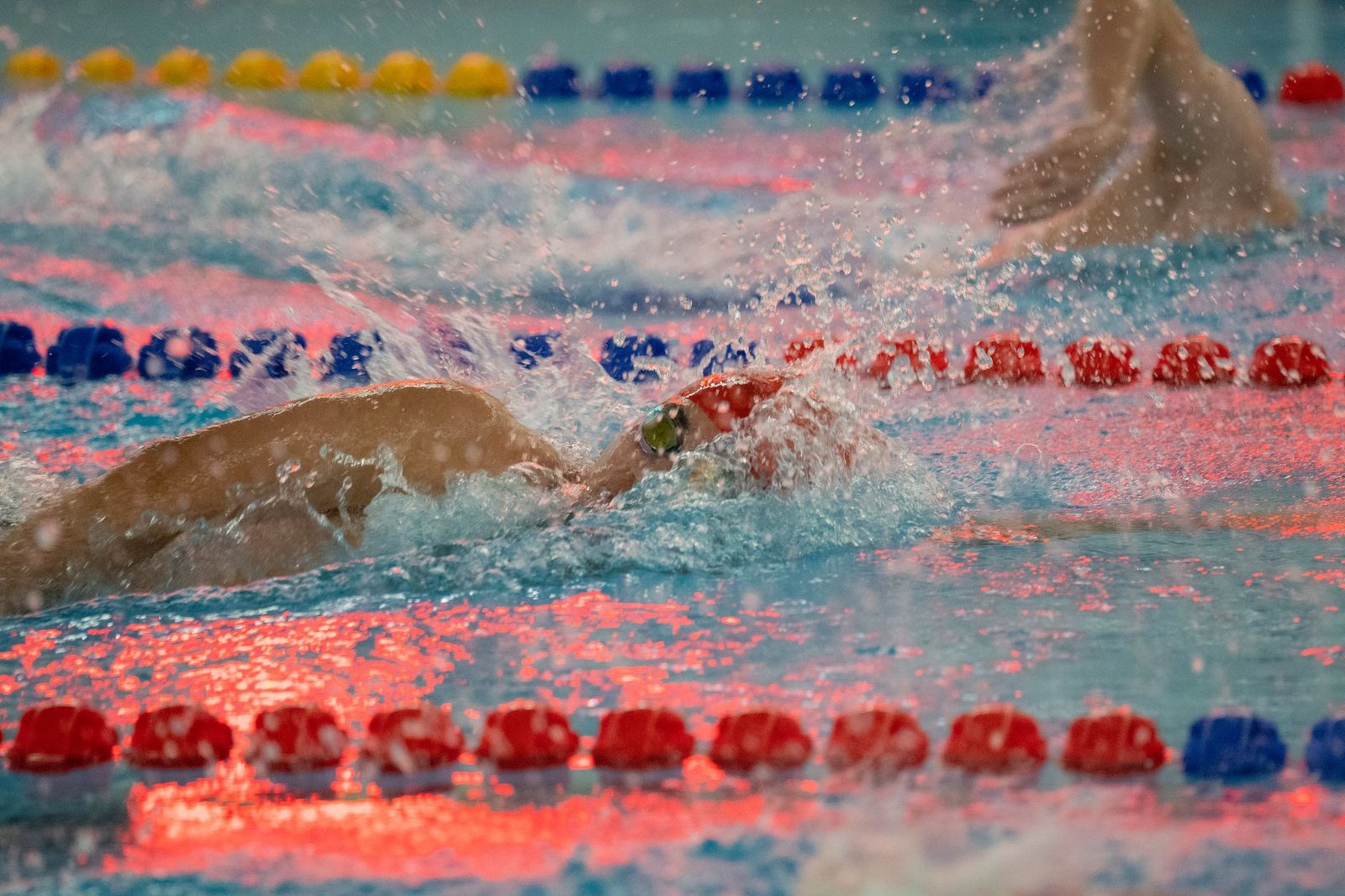
Quick Answer: What Makes a Fast Sprint Freestyle Pull?
A fast sprint freestyle pull starts with an early catch, keeps the elbow higher than the hand, uses the forearm to press water backward, connects the pull to the torso, and exits cleanly before the stroke gets stuck behind the body. The goal is high power at high tempo without letting the hand slip or the body line fall apart.
Sprint Pull Formula
Fast sprint pull = early catch + high forearm + connected rotation + clean exit + controlled stroke rate
Why Sprint Pull Mechanics Are Different
Distance freestyle rewards efficiency and rhythm. Sprint freestyle still needs efficiency, but the swimmer has less time to set each stroke. The pull must be powerful without becoming long, slow or overloaded.
Do
- Set the catch quickly.
- Keep the forearm firm against the water.
- Use rotation without over-rolling.
- Exit cleanly near the hip.
- Maintain a high but controlled stroke rate.
Do not
- Drop the elbow during the catch.
- Pull straight down instead of back.
- Over-glide like a distance set.
- Muscle through with tense shoulders.
- Shorten the stroke into frantic spinning.
The 5 Phases of a Sprint Freestyle Pull
1. Entry
Enter cleanly in front of the shoulder. Avoid crossing the centerline.
2. Extension
Reach forward without pausing too long or locking the shoulder.
3. Catch
Angle the hand and forearm so you can hold water early.
4. Pull
Press water backward while the body rotates through the stroke.
Race cue
Think “set and press,” not “reach and yank.” A sprint pull should feel aggressive, but the hand should not slip downward or outward.
High-Elbow Catch: The Key Sprint Skill
The high-elbow catch helps the swimmer use the forearm as a larger surface area against the water. In sprint freestyle, this position must happen quickly. If the elbow drops, the hand presses down and the hips may lift or sink unpredictably.
| What You Feel | Likely Issue | Correction Cue |
|---|---|---|
| Hand slips downward | Dropped elbow | Tip fingertips down, keep elbow higher |
| Shoulders burn early | Pulling with arm only | Connect pull to torso rotation |
| Fast turnover but no speed | Short weak catch | Hold water before increasing rate |
| Body snakes side to side | Cross-over entry or unstable core | Enter in front of shoulder, brace core |
| Pull feels stuck behind body | Late exit | Exit cleanly near the hip |
Best Drills for Sprint Freestyle Pull Mechanics
| Drill | Main Skill | How to Use It | Helpful Gear |
|---|---|---|---|
| Front scull | Catch pressure | Use short sets before sprint work | Swim snorkel |
| Fist drill | Forearm awareness | Alternate fist swim and normal swim | None |
| Paddle sprint 12.5s | Powerful catch | Short controlled sprint efforts | Swim paddles |
| Single-arm freestyle | Pull path | Focus on one arm and clean rotation | Pull buoy |
| Tempo trainer sprint | Stroke rate control | Increase tempo gradually without losing catch | Tempo trainer |
How Racing Goggles Affect Sprint Freestyle
Goggles will not fix poor pull mechanics, but they can reduce distractions during sprint training and racing. A good racing goggle should stay secure on starts, keep vision clear, avoid leaks during high-speed turns and feel low-profile enough that the swimmer can focus on rhythm.
| Goggle Type | Why It Helps Sprinters | Best Pick | Check |
|---|---|---|---|
| Value race/training | Secure enough for practice starts and daily sprint sets | Speedo Vanquisher 2.0 | Check |
| Premium racing | Low-profile fit and strong race-day feel | Arena Cobra Ultra Swipe | Check |
| Outdoor sprint / tri | Glare control for bright outdoor pools and open water | TYR Special Ops 2.0 Polarized | Check |
| General racing search | Compare fits and lens options before race season | Racing swim goggles | Check |
Sample Sprint Pull Set
Use this as a short technique set before a sprint main set. Keep quality high and stop if the catch starts slipping.
4 x 50 easy freestyle, focus on clean entry and relaxed shoulders.
4 x 25 front scull into easy swim. Focus on pressure against the forearm.
4 x 25 fist drill, then 4 x 25 normal swim with stronger catch.
6 x 12.5 fast from push, rest plenty, hold water before increasing turnover.
100 easy backstroke or freestyle to relax shoulders and restore rhythm.
Common Sprint Pull Mistakes
Spinning the arms
High stroke rate without catch pressure wastes energy and creates little speed.
Dropping the elbow
This turns the pull into a downward press instead of backward propulsion.
Pulling too far back
A late exit can slow recovery and break sprint rhythm.
Over-rotating
Too much roll slows the sprint tempo and can destabilize the kick.
Ignoring breathing timing
Lifting the head during a sprint can ruin body line and catch quality.
Using paddles too much
Paddles can help feel the catch, but too much high-intensity paddle work can overload shoulders.
Frequently Asked Questions
What is the most important part of sprint freestyle pull mechanics?
The most important part is the early catch. A swimmer must set the hand and forearm quickly so the pull presses water backward instead of slipping down.
Should sprint freestyle have a high stroke rate?
Yes, but stroke rate should increase only while catch pressure stays strong. A fast turnover with a weak catch usually creates splash, not speed.
Do swim paddles help sprint freestyle?
Swim paddles can help sprinters feel catch pressure and pull path, but they should be used carefully and in short quality sets to avoid shoulder overload.
What goggles are best for sprint freestyle racing?
Sprinters usually benefit from secure, low-profile racing goggles. Speedo Vanquisher 2.0 is a strong value pick, while Arena Cobra Ultra Swipe is a premium race-day option.
How do I stop my hand from slipping in sprint freestyle?
Practice front scull, fist drill and controlled paddle work. Focus on keeping the elbow higher than the hand and pressing water backward with the forearm.
Is sprint freestyle pull different from distance freestyle pull?
Yes. Sprint freestyle uses a faster tempo and more aggressive catch, while distance freestyle usually emphasizes sustainable rhythm and efficiency over repeated high-power strokes.
Final Takeaway
Sprint freestyle pull mechanics depend on a fast catch, firm forearm, connected rotation and clean exit. Do not chase turnover before you can hold water. Build the catch first, then add stroke rate and race rhythm.
Use racing goggles that stay secure and clear so your attention stays on speed, timing and water feel—not leaks, fog or strap adjustment.
