
Open Water Goggle Care Guide
Open-water swimming is harder on goggles than pool swimming. Salt, sand, sunscreen, lake residue, UV exposure, cold water, wet bags and rough transport can scratch lenses, weaken straps, damage anti-fog coating and make even premium goggles fail early.
This guide explains the most useful swim goggle accessories and care tips for open water swimmers, including protective cases, anti-fog spray, bungee straps, safety buoys, neoprene caps, sunscreen and the daily maintenance habits that keep your goggles clear, safe and reliable.
This article contains affiliate links. As an Amazon Associate, BestSwimGoggles.com may earn from qualifying purchases. This does not change the price you pay and does not control our editorial recommendations.
Quick Answer: What Accessories Do Open Water Swimmers Need for Goggles?
The most useful swim goggle accessories for open water are a ventilated hard-shell goggle case, anti-fog spray, bungee replacement strap, bright safety swim buoy, neoprene cap for cold water, water-resistant mineral sunscreen and a mesh bag for wet gear. These accessories protect your goggles, improve visibility, and make open-water swimming safer.
Best open-water goggle accessories:
- Hard-shell goggle case: protects lenses from scratches and impact.
- Anti-fog spray: helps restore lens clarity when factory coating fades.
- Bungee strap: improves adjustment and reduces strap failure risk.
- Safety swim buoy: improves visibility to boats and gives flotation support.
- Neoprene cap: adds warmth in cold water.
- Mineral sunscreen stick: protects face without running into eyes as easily.
- Mesh swim bag: helps wet gear ventilate after a swim.
Do not throw wet goggles loose into a sandy bag. Most lens scratches and coating damage happen after the swim, not during it.
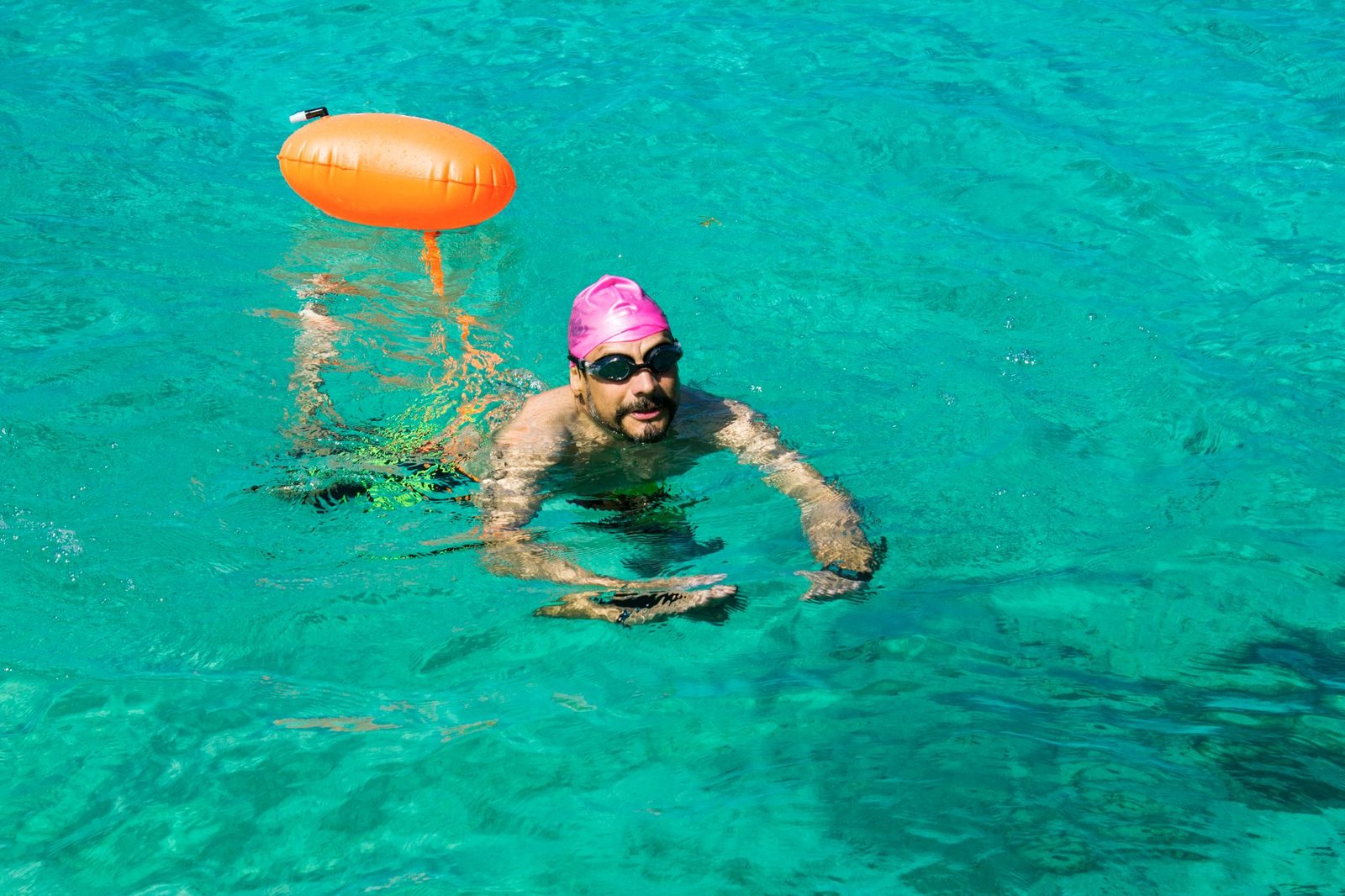
Essential Swim Goggle Accessories for Open Water
Open-water swimmers need more than goggles alone. The right accessories help protect your lenses, improve anti-fog performance, increase safety and make your gear last longer.
| Accessory | Best For | Why It Matters | Buying Tip | Check Gear |
|---|---|---|---|---|
| Hard-shell goggle case | Lens protection | Prevents scratches from keys, sand, bottles and gear | Choose a ventilated case so wet goggles can breathe | Check Cases |
| Anti-fog spray | Clearer vision | Helps when factory coating weakens | Follow instructions and avoid rubbing inside lenses | Check Spray |
| Bungee replacement strap | Fast adjustment | Can be easier to tighten and more durable than worn rubber straps | Check compatibility with your goggle model | Check Straps |
| Safety swim buoy | Open-water visibility | Makes swimmers easier to see and can provide flotation support | Choose bright orange, pink or yellow | Check Buoys |
| Neoprene swim cap | Cold water | Helps reduce heat loss from the head | Choose thickness based on water temperature | Check Caps |
| Water-resistant sunscreen | Outdoor sun protection | Protects nose, cheekbones and neck during long swims | Mineral sticks are often easier near the face | Check Sunscreen |
Why Open Water Is Hard on Swim Goggles
A pool exposes goggles mostly to chlorine and repeated rinsing. Open water adds more variables: salt crystals, sand, sunscreen, lake sediment, UV exposure, cold shock, waves and rough bag storage after the swim.
Open-Water Stressors
- Saltwater drying on the gasket.
- Sand scratching lenses.
- Sunscreen residue on seals.
- UV exposure weakening straps.
- Cold water stiffening materials.
- Wet storage causing odor or mildew.
What Good Care Prevents
- Scratched lenses.
- Cloudy vision.
- Anti-fog coating damage.
- Cracked silicone gaskets.
- Stretched or brittle straps.
- Leaks caused by worn seals.
1. Hard-Shell Goggle Case
A hard-shell goggle case is the most important accessory for protecting open-water goggles. Lenses are easy to scratch, especially when goggles are tossed into a bag with keys, bottles, wetsuit zippers, sand, fins or paddles.
A good case should protect the lenses while allowing enough airflow that wet goggles do not sit sealed in moisture for days.
Look for:
- Hard or semi-hard shell.
- Ventilation holes or breathable design.
- Enough room so lenses are not compressed.
- Drainage or quick-dry interior.
- Clip or loop if you attach it to a swim bag.
2. Anti-Fog Spray for Open Water
Factory anti-fog coating does not last forever. Heat, saltwater, sunscreen and repeated use can weaken it. Anti-fog spray can help extend lens clarity, especially before longer open-water swims.
Start With Clean Goggles
Rinse old residue from the lenses first. Let them dry if the spray instructions require dry application.
Apply Lightly
Use only a small amount. Too much product can smear or irritate your eyes if not rinsed according to instructions.
Follow the Label
Some sprays need a short wait time; others need a light rinse before swimming. Follow the product instructions exactly.
Anti-fog spray cannot fully repair deeply scratched lenses or a completely destroyed coating.
For more detail, read our guide on how to prevent swim goggles from fogging.
3. Bungee Replacement Straps
Open-water swimmers often adjust goggles quickly before entering the water or during a race transition. A bungee strap can make adjustment easier and may be more durable than a worn factory strap.
Why Bungee Straps Help
- Easy one-hand adjustment.
- Less hair pulling for some swimmers.
- Good backup if the original strap stretches.
- Useful for race-day reliability.
- Can distribute tension more evenly.
Before Buying
- Check if your goggles support strap replacement.
- Confirm strap width and connector style.
- Test the fit before race day.
- Do not over-tighten to force a bad seal.
- Carry the original strap as backup if possible.
For fit and strap tension, see how to adjust swim goggle straps.
4. Safety Swim Buoy
A safety swim buoy is not just an accessory. For open-water swimmers, it is one of the most important safety tools you can carry. A bright buoy makes you easier to see from boats, kayaks, shore and other swimmers.
Many swim buoys also offer a dry compartment for small items and can provide flotation support if you need to stop, calm down or rest.
Choose a swim buoy with:
- Bright high-visibility color.
- Comfortable waist belt.
- Enough buoyancy for resting support.
- Dry bag compartment if you carry keys or phone.
- Durable valve and material.
- Low-drag shape for longer swims.
5. Neoprene Cap or Beanie
In cold open water, a standard silicone pool cap may not be enough. A neoprene cap or beanie adds insulation and can make cold starts feel more manageable.
| Cap Type | Best For | Notes |
|---|---|---|
| Silicone swim cap | Pool and warm open water | Good for hair control but limited warmth |
| Neoprene cap | Cool open water | Adds insulation and can reduce cold shock |
| Neoprene beanie | Colder lakes and ocean swims | Often more coverage around ears and forehead |
| Double-cap setup | Race day and extra warmth | Some swimmers wear goggles between two caps for security |
6. Water-Resistant Mineral Sunscreen
Open-water swimmers need sun protection, especially on the nose bridge, cheekbones, ears, neck and shoulders. The challenge is choosing sunscreen that stays put and does not run into your eyes or coat your goggle gasket.
Open-water sunscreen tips:
- Use a water-resistant formula suitable for swimming.
- Mineral sticks can be easier around the face.
- Apply before putting goggles on.
- Keep sunscreen off the inside lens.
- Rinse goggle gasket after swims to remove residue.
- Do not store sunscreen bottles loose against your goggle lenses.
Open-Water Goggle Care Routine
The best care routine is simple, but it must happen after every swim. Salt, sand and sunscreen become more damaging when they dry on the lens, gasket and strap.
Rinse With Cool Fresh Water
Rinse lenses, gasket and strap after ocean, lake or pool swims. Avoid hot water because heat can damage coatings and silicone.
Never Rub the Inside Lens
The inside lens often has a delicate anti-fog coating. Rubbing it with fingers, towels or sandy hands can damage it quickly.
Air Dry in Shade
Let goggles dry fully in a cool, ventilated area. Do not leave them on a sunny dashboard or in a hot car.
Store in a Ventilated Case
Once dry, place goggles in a case. If they are still wet, avoid sealing them in an airtight container for days.
For a broader cleaning routine, read swim goggles maintenance.
Open Water vs Pool Goggle Care
Pool goggles and open-water goggles need similar care, but open water adds more abrasive and environmental damage risks.
| Environment | Main Risk | Care Tip |
|---|---|---|
| Chlorinated pool | Chemical residue drying on gasket | Rinse after every swim and air dry |
| Ocean | Salt and sand scratching or drying on materials | Rinse thoroughly with fresh water as soon as possible |
| Lake or river | Silt, organic residue and cloudy water | Inspect gasket edges and rinse carefully |
| Outdoor pool | Sunscreen, UV and heat | Keep sunscreen off lenses and avoid hot storage |
| Race transition bag | Scratches, pressure and wet storage | Use a case immediately after swimming |
Common Open-Water Goggle Mistakes
Avoid these mistakes:
- Throwing goggles loose into a sandy transition bag.
- Leaving wet goggles sealed in a case for days.
- Rubbing the inside lens with sandy fingers.
- Leaving goggles in a hot car after a swim.
- Using sunscreen and then touching the inside lens.
- Skipping a fresh-water rinse after saltwater swims.
- Waiting until race day to test a new bungee strap.
- Swimming open water without a visible safety buoy.
When Should You Replace Open-Water Goggles?
Accessories and care help goggles last longer, but they cannot fix every problem. Replace goggles when visibility or seal quality becomes unreliable.
| Problem | Can Care Fix It? | What to Do |
|---|---|---|
| Light salt or chlorine residue | Usually yes | Rinse and air dry consistently |
| Minor fogging | Sometimes | Use anti-fog spray and protect coating |
| Deep lens scratches | No | Replace goggles for safety and visibility |
| Cracked gasket | No | Replace goggles |
| Stretched or broken strap | Sometimes | Use replacement strap if compatible |
| Permanent cloudiness | Usually no | Replace goggles |
Open-Water Swim Bag Checklist
Use this checklist before leaving for an open-water session.
Goggle & Vision Gear
- Open-water goggles
- Backup goggles
- Hard-shell goggle case
- Anti-fog spray
- Bungee replacement strap
- Microfiber towel for outside gear only
Safety & Comfort Gear
- Safety swim buoy
- Bright swim cap
- Neoprene cap for cold water
- Water-resistant sunscreen
- Mesh swim bag
- Warm dry clothes for after the swim
Frequently Asked Questions
What is the most important swim goggle accessory?
A ventilated hard-shell goggle case is the most important accessory because it protects lenses from scratches, pressure and bag damage after a swim.
Do open-water swimmers need anti-fog spray?
Anti-fog spray is useful when the original lens coating starts to fade, especially for long swims. It works best when lenses are not scratched and the product instructions are followed carefully.
Are bungee straps good for swim goggles?
Bungee straps can be useful because they are easy to adjust and may be more durable than worn rubber straps. Always check compatibility with your goggle model before replacing the strap.
Should I use a swim buoy in open water?
Yes, a bright swim buoy is strongly recommended for open-water swimming because it improves visibility and can provide flotation support if you need to stop and rest.
How do I clean goggles after ocean swimming?
Rinse them thoroughly with cool fresh water, avoid rubbing the inside lens, let them air dry in shade and store them in a ventilated case once dry.
Can sunscreen damage swim goggles?
Sunscreen can leave residue on gaskets and lenses, especially if it gets inside the goggles. Apply sunscreen before putting goggles on and rinse goggles after outdoor swims.
Final Takeaway
Open-water goggles need more protection than pool goggles. A hard-shell case, anti-fog spray, bungee strap, safety buoy, neoprene cap, sunscreen and mesh bag can make your gear safer, clearer and longer-lasting.
The most important habit is simple: rinse goggles with fresh water, never rub the inside lens, let them dry fully and store them in a protective case. Treat your goggles well on land, and they are more likely to protect your vision in the water.
