
Why Kids’ Swim Goggles Keep Leaking
Leaky kids’ goggles are rarely solved by pulling the strap tighter. More often, the frame is the wrong shape, hair is breaking the seal, the nose bridge is sitting badly, or the goggles are simply too worn out to hold a gentle seal.
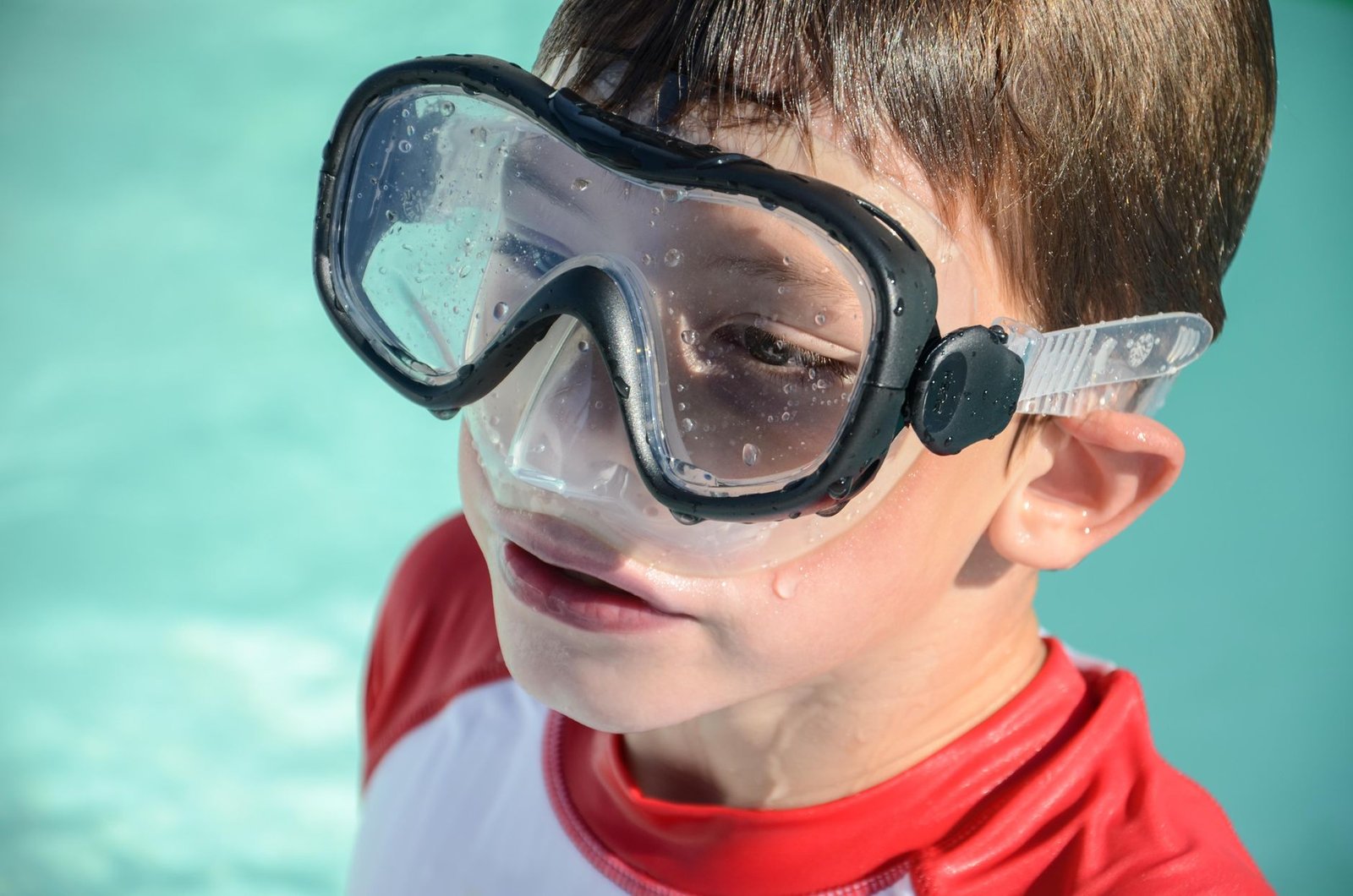
A child who keeps stopping to empty goggles is not always being dramatic. Water in the lens stings, blurs the lane, interrupts the lesson, and makes the whole pool feel less predictable. Parents often respond the obvious way: tighten the strap, press the goggles harder, and hope the leak disappears.
That can work for about two minutes. Then the child complains that the goggles hurt, pushes them up onto the forehead, or refuses to put them back on. The leak was never fixed. It was only replaced by pressure.
The better approach is to treat the leak as a fit problem first. A child’s face is smaller, softer around the eye socket, and less forgiving of a frame that sits slightly too wide or too tall. Strap tension matters, but it should be the final adjustment, not the main solution.
The strap is usually not the real problem
When adult goggles leak, many swimmers still overtighten them. With kids, that habit causes trouble even faster. A tight strap can pull the eye cups outward, flatten the gasket, or drag the frame up toward the eyebrows. Any of those changes can open a tiny gap near the lower eyelid or inner corner.
A good kids’ goggle should feel lightly sealed before the strap does much work. The strap is there to keep the goggles in place while the child moves, jumps, and turns. It should not have to crush the frame into the face.
Look for the clue after the lesson. Deep rings, red marks near the nose, or a child rubbing the eye socket usually mean the strap was doing too much. Light marks can be normal, but pain and resistance are signs to change the setup.
Hair breaks the seal more often than parents expect
One strand of hair under the gasket is enough to make a good pair leak. This is especially common with younger kids because they move around while the goggles are being adjusted. The frame looks centered for a second, then a piece of hair slides under the lower gasket as they turn toward the pool.
Before tightening anything, run a finger around the gasket edge and check that it is touching skin, not hair. If your child wears a swim cap, make sure the cap edge is not tucked under the goggles. If the cap keeps pulling the goggles out of place, try setting the goggles first, then smoothing the cap around the strap rather than dragging the cap over the frame.
For children with long hair who hate elastic straps, a fabric-strap or Frogglez-style design may reduce the battle around hair pulling. Compare Frogglez kids’ swim goggles if the main complaint is hair, scalp pressure, or getting goggles on without help. Check the current listing and sizing before buying; kid fit varies more than adult fit.
The frame may be too wide, even if the age range looks right
Age labels help, but they are not precise. Two seven-year-olds can have very different face width, nose bridge height, and eye socket shape. A goggle that works for one child in class may sit too wide on another child, leaving a leak at the outer corners.
Wide frames often look comfortable because they cover more area. On a narrow face, though, the gasket may land partly on the cheek rather than around the eye socket. When the child smiles, talks, or pushes off the wall, the cheek moves and the seal breaks.
If the leak is near the outside corner of the eye, stop tightening and look at frame width. A smaller youth goggle such as TYR Swimple-style kids’ goggles or Speedo Jr. Hydrospex-style goggles may be a better comparison point than a large recreational mask. If your child is older, narrower-faced, or moving toward swim team, compare a slimmer option such as Speedo Jr. Vanquisher 2.0-style goggles, but avoid buying a race-leaning fit if comfort is the bigger issue.
Leaks near the nose point to a different fit issue
Water near the inner eye often comes from the nose bridge area. The goggles may be sitting too high, the bridge may be too wide, or the eye cups may be pulled apart by the strap. Some kids also have a lower or flatter bridge that leaves a small opening even when the rest of the gasket looks sealed.
Do not judge this from the front only. Look from slightly above and below. If the inner corners lift away from the skin, a different nose bridge or a softer frame may help more than strap adjustment.
The same idea applies to adult goggles, but children are less likely to tolerate the wrong fit. If you want the deeper mechanics, the nose bridge fit guide explains why a small bridge mismatch can create leaks and pressure marks.
When a different style makes more sense
If your child is new to swimming, comfort usually matters more than a sleek racing profile. A softer recreational frame or small swim mask can give the child more confidence because it feels less sharp around the eye socket. Compare something like Aqua Sphere Seal Kid 2-style goggles if the main problem is fear, comfort, or a child who does not like small eye cups.
If your child already swims laps, dives, or does starts, a bulky comfort goggle may move too much. In that case, a junior training goggle can be better, but only if it seals without pain. The point is not to buy the most serious-looking pair. It is to match the goggle to the child’s actual swimming.
Try the dry seal check before the next lesson
This takes less than a minute and prevents most strap-tightening arguments.
Have your child stand still with dry skin. Press the goggles gently onto the face without using the strap. You are not trying to create a vacuum that lasts forever. You only want to see whether the eye cups sit evenly and hold for a brief moment without obvious gaps or pain.
If the goggles fall instantly, check for hair or crooked placement, then try once more. If they still fall, the shape is probably wrong. If they hold only when pressed hard, the gasket is not matching the face. If they hold but hurt at the nose or outer corners, the frame is not a good comfort match even if it technically seals.
The adult version of this test is covered in the dry suction test guide. For kids, keep it gentler. The goal is not to prove the goggles can stick; the goal is to see whether the frame wants to sit naturally on the face.
Old kids’ goggles leak in quiet ways
Children are hard on goggles. They leave them in the sun, pull them by one side, drop them on concrete, and stuff them into bags with towels and snacks. Over time, the gasket can stiffen and the strap can stretch. The goggles may still look usable, but they no longer sit evenly.
If a pair used to work and now leaks every lesson, inspect the gasket closely. Look for flattened edges, small tears, sticky residue, or one side that no longer springs back. If the strap has to be tightened further every week, the elastic may be losing its job.
A small kids’ swim goggle case will not fix the wrong fit, but it can protect a pair that already works. That matters if your child finally has goggles they trust.
A practical fix order that avoids tears
Start with the least dramatic change. Clear hair from the gasket. Center the frame. Check the nose bridge area. Do a gentle dry seal test. Only then adjust the strap, and adjust it in small steps.
If the child still gets water in the same place, take that location seriously. Outer-corner leaks usually suggest frame width or cheek movement. Inner-corner leaks often point toward nose bridge fit. Water across the bottom gasket may mean the goggles are sitting too low or the frame is too tall for the face.
If none of that works, replace the goggles rather than turning the strap into a clamp. A child who associates goggles with pain will resist them even after you buy a better pair. The goal is not a perfect seal at any cost. The goal is a seal the child can tolerate long enough to relax and swim.
Where to go next
If your child refuses goggles entirely, read how to get kids to wear swim goggles before buying another pair. If you are comparing actual models, start with the guide to the best swim goggles for kids. If the issue is sizing, comfort, and lens choice all at once, the broader guide to choosing swim goggles for kids will help you narrow the trade-offs.
Not sure which swim goggles are right for your child?
Answer a few quick questions about swim setting, face fit, lens needs, comfort, and budget. The Best Swim Goggles Finder can help narrow the options without making you guess from another long product list.
