
Can You Swim With Contacts and Goggles?
Goggles can help you see and keep splashes out, but they are not a medical shield for contact lenses. If you swim often, the better answer is usually prescription swim goggles rather than relying on contacts under a regular pair.
Affiliate disclosure: This article contains affiliate links. As an Amazon Associate, BestSwimGoggles.com may earn from qualifying purchases. That does not change the price you pay or control which products are recommended.
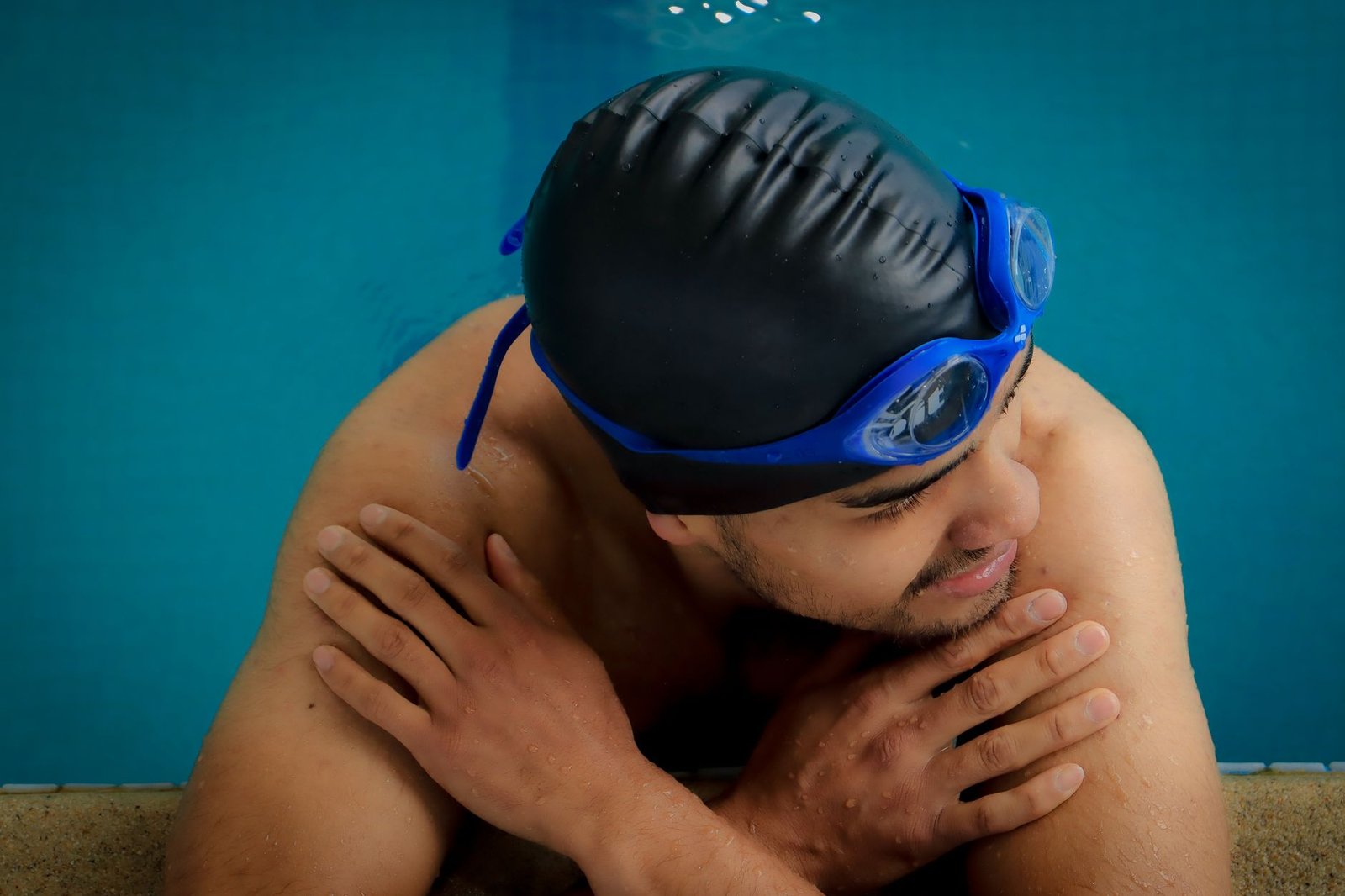
The quick answer is uncomfortable but useful: it is safer to take contact lenses out before swimming. Goggles may reduce the amount of water that reaches your eyes, but no pair should be treated as a guarantee that pool, lake, ocean, or hot tub water will stay away from your lenses.
The CDC is direct about this. Contact lenses and water are a bad combination, including swimming and showering. Water can change the shape of soft lenses, make them stick to the eye, and create a route for germs to cause infection. Their guidance also points swimmers who need vision correction toward prescription goggles as a better option. You can read the CDC page on keeping water away from contact lenses.
Why goggles do not make contacts risk-free
A good swim goggle seal is helpful. It keeps water from washing across the eye every time you push off, breathe, or get splashed in a crowded lane. That is not the same as a sealed medical barrier.
Swim goggles move. The gasket flexes when you smile, squint, dive, turn, or press off the wall. A small leak may be barely noticeable when you are wearing normal goggles. With contact lenses, that small leak matters more because the water is now sitting near a medical device on the eye.
That is why the buying decision should start with how often you swim. A person doing occasional hotel-pool laps might talk with an eye care professional and decide how to manage that rare situation. A regular lap swimmer, triathlete, swim parent, or open-water swimmer should not build a routine around contacts plus hope.
The cleaner solution for regular swimmers: prescription goggles
Prescription swim goggles are not as precise as a custom pair of eyeglasses. Most premade optical goggles correct in simple diopter steps, and they often do not address astigmatism the way a full prescription does. Still, for many swimmers who mainly need to see the pace clock, lane line, wall, or pool deck, they are the more sensible starting point.
The point is not perfection. The point is getting usable vision without putting contact lenses in the water.
If you want a familiar lap-swim shape, compare the Speedo Vanquisher Optical. It makes sense for swimmers who already like compact training goggles and need basic optical correction. Skip it if soft comfort is your main priority; this style is still closer to a training goggle than a plush recreational frame.
If price matters, the Sporti Antifog Optical is a practical comparison point. Budget optical goggles can be useful for occasional lap swimmers, but check the available diopter range and current listing details before buying. Premade optical goggles are not one-size-fits-all prescriptions.
If you prefer a sportier training fit, look at the TYR Corrective Optical or VIEW V-500 Platina. These are the kind of options to compare when you want optical correction but still care about a secure pool-swimming feel.
If you need a recreational nearsighted option, the ZIONOR G7 Nearsighted Swimming Goggles may be another product to compare. Read the current product details carefully, especially lens strength, fit notes, and whether both lenses use the same correction.
If your prescription includes significant astigmatism, different correction in each eye, or eye health concerns, premade optical goggles may not be enough. That is a good reason to ask an optometrist about custom swim goggles instead of guessing from an Amazon listing.
If you still swim in contacts, do not pretend the goggles solved it
Some swimmers will still wear contacts in the water. Maybe it is a one-off trip, an open-water event, or a situation where prescription goggles were not available in time. The responsible advice is not to say “sure, just wear goggles.” It is to understand what the goggles can and cannot do.
A tighter or wider-sealing pair may reduce water wash-in. That can be useful, but it does not remove the risk. If you are trying to limit splashes around your eyes, compare goggles with a forgiving seal rather than small race sockets that only work when everything sits perfectly.
For a larger seal area, compare the Aqua Sphere Seal 2.0. A swim-mask style frame can feel bulky for fast pool sets, but it may suit recreational swimmers who care more about comfort and coverage than a racing feel.
For a wide-view fitness goggle, the Aqua Sphere Kayenne is another relevant comparison. It is not a contact-lens safety device; it is simply the kind of wider, more forgiving goggle swimmers often look at when compact training goggles leak or feel too sharp.
If soft pressure is the bigger issue, the Speedo Biofuse 2.0 is worth comparing against harder socket-style goggles. It is better suited to comfort swimming than to swimmers who want the smallest possible race profile.
That product choice still sits underneath the main safety point: water and contacts do not mix. If water gets behind the goggles and touches your lenses, follow professional guidance rather than shrugging it off.
What not to do after water reaches your contacts
Do not rinse contacts with pool water, tap water, lake water, or saliva. Do not put a contact lens back in your eye just because it “looks fine.” Do not store lenses in water because you forgot solution.
The CDC says that if water touches contact lenses, they should be removed as soon as possible and either thrown away or properly cleaned and disinfected overnight before being worn again. Daily disposables are simpler: if they get exposed to water, discard them.
A practical decision path
If you swim regularly and need correction, start with prescription swim goggles. They may not match your glasses perfectly, but they remove the contact-lens-in-water problem for many ordinary swim sessions.
If you swim rarely and are thinking about contacts under goggles, treat it as a question for your eye care provider, especially if you have dry eyes, a history of eye infections, corneal issues, or complicated prescriptions.
If your main problem is that goggles leak, hurt, or fog, fix that separately. Contacts should not be used to compensate for a pair of goggles that does not fit. The guides on the dry suction test, why goggles hurt around the eyes, and nose bridge fit can help you diagnose the fit problem before buying another pair.
The bottom line
You can physically swim with contacts and goggles, but that is not the same as saying it is the best choice. Goggles can help with splashes and visibility. They cannot guarantee that water stays away from a contact lens.
For regular swimmers, prescription goggles are usually the cleaner answer. For occasional swimmers, the decision belongs in a conversation with an eye care professional, not a product page. If you do use goggles, choose them for fit first: a leaky pair turns a small risk into a more obvious one.
Not sure which swim goggles are right for you?
Answer a few quick questions about your swim style, face fit, lens needs, and budget. Get matched with goggles that make sense for how you actually swim.
