
How to choose goggles for swim meets
The right meet goggles are not always the most expensive pair or the sharpest-looking mirrored lens. They are the pair you have already proven in warm-up pace, starts, turns, and the lighting of the pool where you will race.
Affiliate disclosure: This article includes Amazon affiliate links. If you buy through those links, BestSwimGoggles.com may earn a small commission at no extra cost to you. Product examples are included to help compare fit types and use cases, not as guaranteed matches for every swimmer.
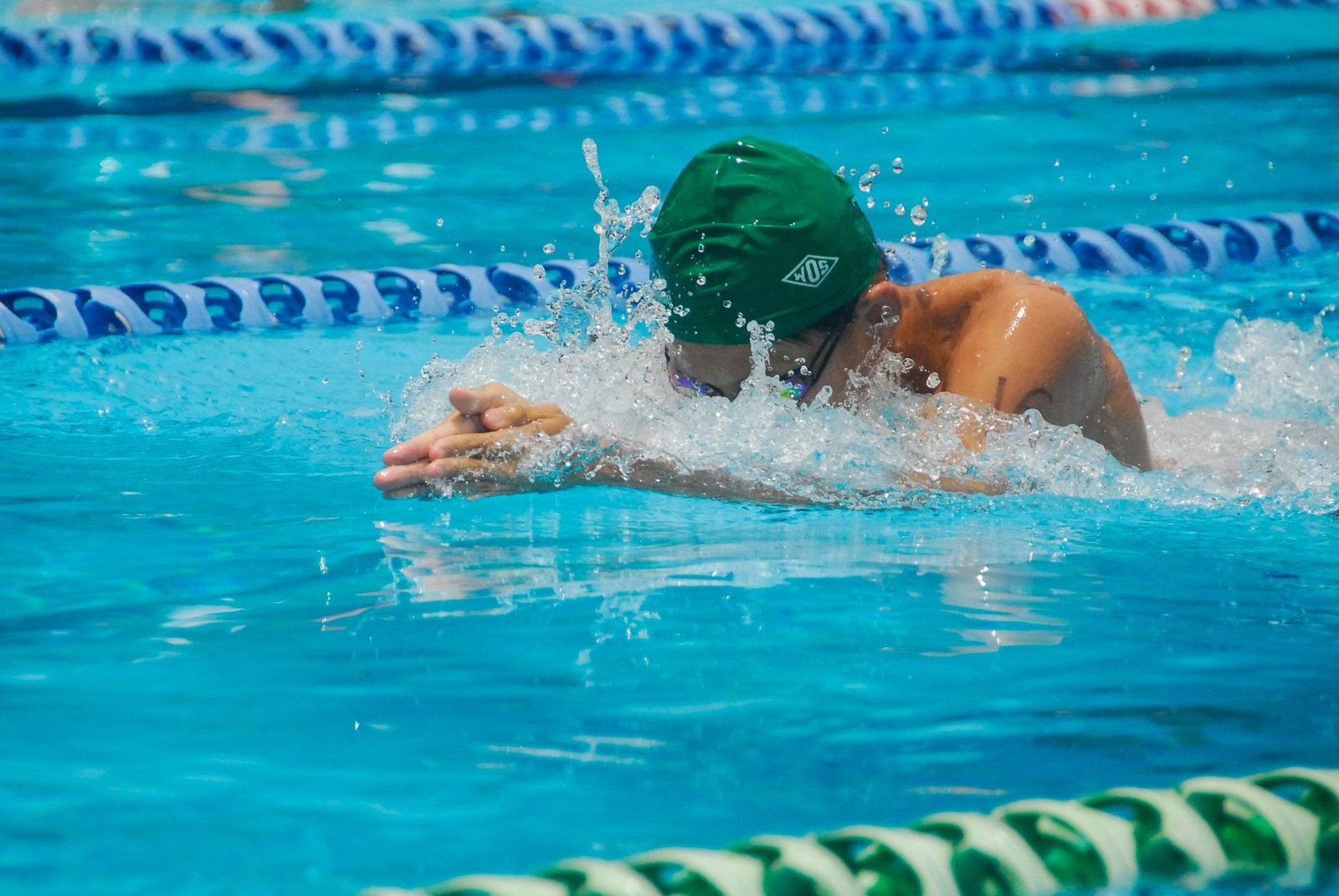
A swim meet is a bad place to discover that your goggles only work when you are relaxed. In practice, you can stop after a 100, lift the lens, rinse it, adjust the strap, and push off again. During a race, the same small problem feels much bigger. A tiny leak on the dive becomes water sitting in one eye. A lens that looked fine at home feels too dark under indoor lights. A strap that felt secure in warm-up pulls too tight once nerves arrive.
For most swimmers, the safest swim meet goggle is simple: a pair that seals without painful strap tension, stays settled when you push off hard, gives enough visibility for the pool lighting, and has already been worn in real practice. New goggles can be a smart purchase. New goggles on race day are a gamble.
Start with the race, not the product photo
Meet goggles have a different job than casual lap goggles. They do not need to be the softest pair in your bag. They do need to survive the parts of swimming that expose weak fit: the start, the breakout, turns, and hard breathing under fatigue.
That does not mean every swimmer needs a narrow elite racing goggle. A young swimmer at a first meet may race better in a familiar training pair than in a low-profile model that hurts. A Masters swimmer doing distance events may prefer a compact but comfortable frame over a tiny socket goggle. A sprinter who dives hard may accept a firmer feel if the seal stays locked on the block start.
A meet pair should feel secure before it feels fast. If it needs pain to stay sealed, it is not ready for race day.
The fit test that matters before meet day
The dry suction test is useful, but it is only the first filter. A goggle can pass a bathroom mirror test and still fail when you push off the wall at race pace. Give the pair one short practice set before trusting it for a meet.
Use the goggles for warm-up, a few fast 25s, and at least a couple of strong turns. If you are racing from a block, test a dive under safe conditions with a coach or in a setting where starts are allowed. Watch for the first place the fit breaks down. Inner-corner leaks point toward bridge spacing. Water entering from the outside edge often means the frame is too narrow or the strap angle is pulling the gasket off your face. A foggy lens after five minutes may be a lens-care issue, not a fit issue.
Lens choice depends on the pool, not the lane next to you
Mirrored lenses can look like the obvious race choice, especially for swimmers who want a competition feel. They make sense in bright pools, outdoor meets, or natatoriums with strong overhead light. They are not automatically better indoors. In a dim pool, a dark mirrored lens can make the flags, wall, and lane lines feel duller than they need to be.
Clear lenses are still useful for many indoor meets. Smoke or light mirrored lenses sit in the middle. Outdoor summer meets may call for stronger tint or mirrored lenses, especially when glare comes off the water. If a meet runs from morning into afternoon, bring the pair that matches the brightest part of the day and a backup that handles lower light.
For a deeper lens discussion, the site’s guide to swim goggle lens colors is the better place to compare clear, smoke, mirrored, and polarized lenses. For this decision, keep it simple: you need to see the wall, flags, lane line, and starter area clearly without squinting.
Product examples that make sense for different meet swimmers
These are not one-size-fits-all recommendations. They are useful comparison points when you are deciding what kind of meet goggle fits your race and your face. Check the current version, lens option, bridge pieces, and seller details before buying.
Speedo Vanquisher 2.0 is the safe comparison point for many age-group, high school, and Masters swimmers. It is compact enough for meets without feeling as unforgiving as some pure racing goggles. Swimmers who want one pair for practice and occasional racing often start here.
Speedo Speed Socket 2.0 is worth comparing if Vanquisher-style goggles feel a little too soft or bulky and you want a leaner race feel. It is better for swimmers who already know they tolerate a firmer fit.
Arena Cobra Ultra Swipe-style goggles fit the swimmer who wants a premium low-profile race feel and is willing to spend more for a dedicated meet pair. The tradeoff is comfort. If your main issue is eye pressure or bridge pain, do not buy them just because they look fast.
TYR Tracer-X racing goggles are another race-focused option to compare when you want a secure, compact frame. As with any low-profile model, fit testing matters more than brand loyalty.
Speedo Jr. Vanquisher 2.0 is a more sensible direction for many younger swimmers than forcing an adult racing goggle onto a smaller face. Parents should still check for pressure at the nose bridge and outer corners before meet day.
A small accessory can matter as much as the goggle itself. A hard swim goggle case is not exciting, but it keeps race lenses from getting scratched in a crowded bag. Scratched lenses are one of those problems swimmers usually notice too late.
What I would avoid for a first meet pair
Avoid buying the most aggressive racing goggle just because faster swimmers wear it. Low-profile goggles can be excellent, but they are less forgiving. If the swimmer is already nervous, has sensitive eye sockets, or keeps adjusting goggles during practice, a harsh race frame can create a new problem instead of solving one.
Avoid oversized comfort frames for block-start racing unless the swimmer has already tested them with starts and hard push-offs. A wide, soft frame can be comfortable for laps but move more when water hits it during a dive.
Also avoid lens choices based only on style. Dark mirrored goggles look right in a product photo. They may be wrong in a dim indoor pool. Clear goggles may look plain. They may be exactly right for a morning preliminary meet under weak lighting.
The night-before goggle check
The night before the meet is not the time to make big changes. It is the time to prevent small mistakes. Pack the goggles you already trust. Check that the strap holds its adjustment. Look for cracks, stiff gaskets, or lenses that are badly scratched. Put the backup pair in the bag before you think you need it.
If the swimmer uses an anti-fog routine, keep it familiar. Do not experiment with a new spray, wipe, or cleaning method the morning of a race. Anti-fog coatings can be delicate, and over-cleaning often causes more problems than it solves.
- One primary pair that has already been used in practice.
- One backup pair with a similar fit or a lens for different lighting.
- A case or separate pocket so lenses do not get scratched.
- No last-minute strap experiments unless something is clearly wrong.
Parents: check comfort before you check speed
For younger swimmers, the best meet goggle is often the one they will leave alone. If a child spends warm-up pulling the lenses away from their face, the race is already harder than it needs to be.
Ask specific questions. Do they hurt near the nose? Do they pull hair? Does one side fill with water? Does the lens look too dark? Children often say “I do not like these” before they can explain the fit problem. Treat that as information, not drama.
If the swimmer is new to meets, familiar goggles usually beat brand-new racing goggles. There will be time to upgrade later. First, get through the meet with clear vision and no panic adjustments behind the block.
The simple decision
If you only take one idea from this guide, make it this: choose goggles for the moment when swimming gets less controlled. Warm-up feels easy. Race pace does not. The right meet pair should stay sealed when the swimmer dives, turns, breathes hard, and gets nervous.
For many swimmers, that means a proven compact training-and-racing pair. For serious competitors, it may mean a dedicated low-profile race goggle. For younger swimmers, it may mean a junior model that feels comfortable enough to leave alone. None of those choices is automatically superior. The better choice is the one that matches the swimmer, the pool, and the race.
Not sure which swim goggles are right for you?
Answer a few quick questions about your swim style, face fit, lens needs, and budget. Get matched with goggles that make sense for how you actually swim.
