
Swim Safety + Recovery Guide
A cramp while swimming can be scary because it happens in water, often when you are already tired. The safest response is to slow down, stay calm, get support if needed, and gently stretch the cramped muscle when you can do so safely.
This guide explains what helps immediately, why cramps happen during swimming, how to prevent them, and when a cramp may be a sign to stop and get medical advice.
This article contains affiliate links. As an Amazon Associate, BestSwimGoggles.com may earn from qualifying purchases. This does not change the price you pay and does not control our editorial recommendations.
What to Do Immediately If You Cramp While Swimming
Stop trying to swim fast. Roll onto your back or hold the wall, lane rope, kickboard, pool edge, buoy or another safe support. Breathe slowly, keep your head above water, and avoid panicking. Once stable, gently stretch or relax the cramped muscle.
- Pool: move to the wall or lane rope.
- Open water: roll onto your back, signal for help, or use a swim buoy.
- Race: prioritize safety over finishing.
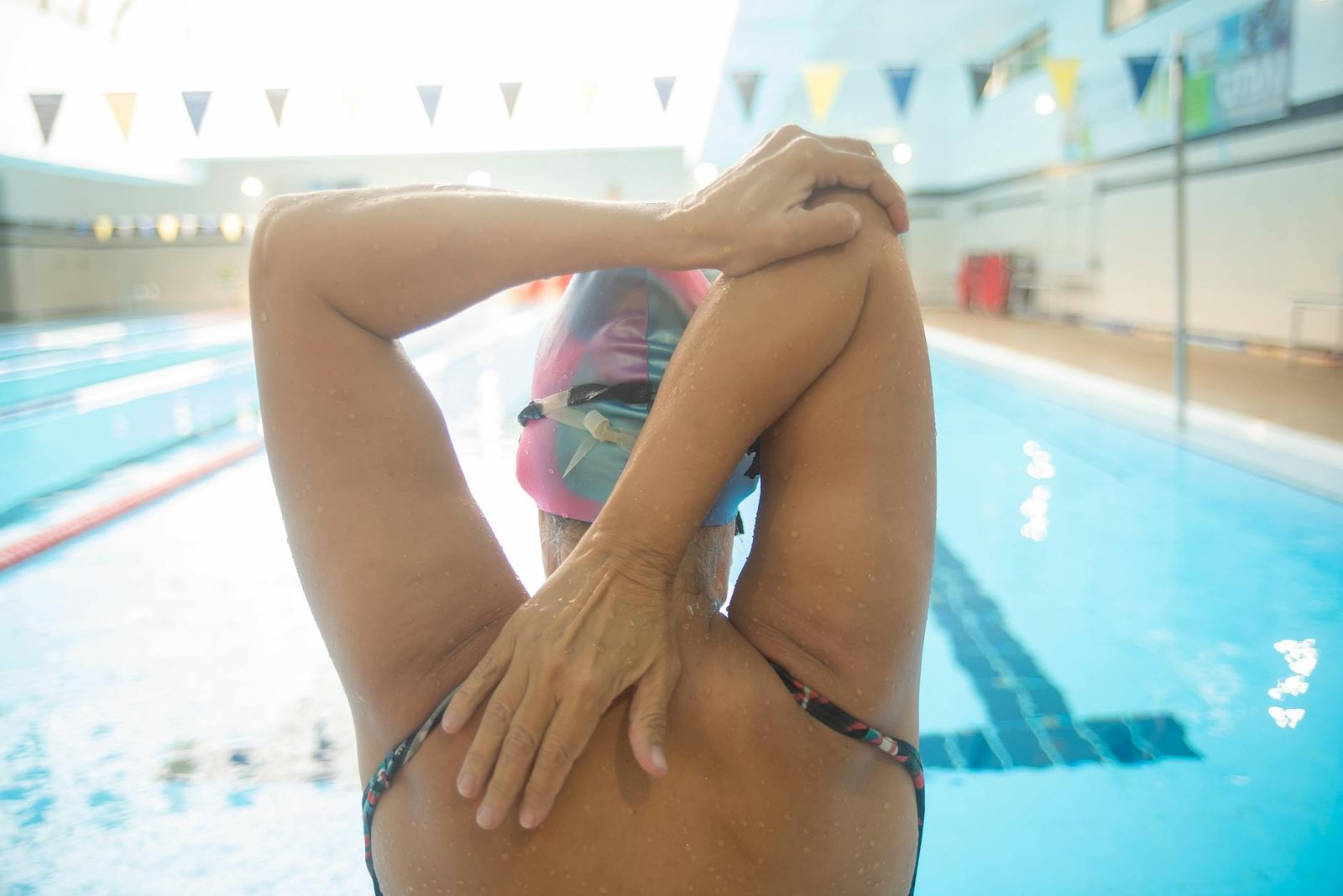
Quick Answer: What Helps a Cramp While Swimming?
The fastest help is to stop, stay afloat safely, relax the muscle, and gently stretch the cramped area. For calf cramps, flex the foot upward toward the shin. For hamstring cramps, straighten the leg gently. For foot cramps, relax the toes and stretch slowly. After the swim, hydrate, walk lightly, and avoid jumping straight back into hard sets.
Stop swimming hard and get stable.
Breathe slowly and keep your head above water.
Gently stretch the cramped muscle.
Exit the water if the cramp does not ease quickly.
Common Swim Cramps and What to Do
Swimmers most often feel cramps in the calf, foot, hamstring or side. The right response depends on where the cramp happens and whether you are in a pool or open water.
| Cramp Location | What It Feels Like | What Helps |
|---|---|---|
| Calf | Tight knot in lower leg, toes may point down | Flex foot upward, hold support, stretch gently |
| Foot / toes | Toes curl or arch tightens | Relax toes, stop hard kicking, gently stretch foot |
| Hamstring | Back of thigh grabs or spasms | Straighten leg carefully, avoid forceful kicking |
| Quad | Front thigh tightness | Rest, bend knee gently only if safe and supported |
| Side stitch | Sharp side discomfort while breathing | Slow down, breathe evenly, switch to easy backstroke or rest |
Why Do Cramps Happen While Swimming?
Swim cramps usually happen when several factors stack up: fatigue, hard kicking, cold water, dehydration, poor pacing, tight muscles, low conditioning, or sudden intensity. Sometimes the exact cause is not obvious.
Fatigue
Muscles that are tired from hard sets, long swims or racing are more likely to cramp.
Cold water
Cold water can make muscles feel tighter and less responsive, especially in open water.
Dehydration
Swimmers still sweat in water, and long sessions can reduce fluid balance.
Hard kicking
Repeated plantar flexion can trigger calf or foot cramps, especially with fins.
Poor pacing
Going too hard too early can overload muscles before they are ready.
Tightness
Tight calves, hamstrings or hips can make cramps more likely during repeated kicking.
Pool Cramp vs Open-Water Cramp
A cramp in a pool is usually easier to manage because the wall, lane rope and lifeguard are nearby. A cramp in open water is more serious because you may be far from support.
In the pool
- Grab the wall or lane rope.
- Signal another swimmer or lifeguard.
- Stretch carefully from a stable position.
- Do not push off hard immediately after the cramp eases.
In open water
- Roll onto your back to breathe.
- Use a swim buoy or floating support if available.
- Signal for help early.
- Do not keep swimming away from shore if the cramp returns.
How to Prevent Cramps Before You Swim
Prevention is about reducing risk, not guaranteeing cramps never happen. The most useful habits are gradual warm-up, hydration, smart pacing and avoiding sudden increases in distance or intensity.
Hydrate, eat normally, do light mobility and avoid starting cold with an all-out set.
Start with easy laps and gradually increase speed instead of sprinting immediately.
Build intensity gradually. Watch for calf or foot tightness during kick sets.
Walk lightly, stretch gently, rehydrate and avoid sitting immediately if legs feel tight.
Hydration, Electrolytes and Food
Hydration matters, especially for longer swims, hot pool decks and outdoor sessions. Electrolytes may help some swimmers, but they are not a magic cure for every cramp. Fatigue and pacing often matter just as much.
| Situation | What Helps | Useful Option |
|---|---|---|
| Short easy swim | Water and normal meals are usually enough | Water bottle |
| Long or hard session | Bring fluids and consider electrolytes | Electrolyte mix |
| Hot outdoor training | Hydrate before, during and after | Sports bottle |
| Frequent cramps | Track pattern and discuss with a professional if persistent | Medical advice if unexplained |
Stretching and Recovery After a Swim Cramp
After a cramp, do not immediately return to hard swimming. Give the muscle time to calm down. Gentle movement is usually better than aggressive stretching.
Calf recovery
Walk lightly, then gently stretch the calf. Avoid bouncing.
Hamstring recovery
Use gentle range of motion and avoid deep forced stretching immediately.
Foot cramp recovery
Relax the toes, massage the arch lightly and reduce hard kicking for the day.
Gear That Can Help Reduce Cramp Risk
Gear does not replace smart pacing and conditioning, but the right support can make training safer and more consistent.
| Gear | Why It Helps | Best For | Check |
|---|---|---|---|
| Water bottle | Encourages drinking during longer pool sessions | All swimmers | Check |
| Electrolytes | May help during long or sweaty sessions | Long swims, hot weather | Check |
| Swim buoy | Provides open-water visibility and emergency flotation support | Open-water swimmers | Check |
| Stretch strap | Supports gentle calf and hamstring mobility | Post-swim recovery | Check |
| Comfortable goggles | Reduces distraction so you can pace and breathe better | Beginners and fitness swimmers | Check |
When Should You Stop Swimming?
Stop the session if the cramp is severe, keeps coming back, affects your ability to stay afloat, or happens with dizziness, chest discomfort, unusual weakness, shortness of breath or confusion. Do not try to “push through” a cramp in open water.
Get medical advice if:
- Cramps are frequent, severe or unexplained.
- The cramped area stays painful or swollen.
- You have numbness, weakness or unusual symptoms.
- Cramps happen with chest pain, faintness or trouble breathing.
- You take medication or have a medical condition that may affect cramps.
Common Mistakes
Panicking in the water
Panic wastes energy. Get stable, breathe and signal for help if needed.
Trying to sprint through it
Hard swimming can make the cramp worse and increase safety risk.
Ignoring cold water
Cold water can make cramps more likely, especially without gradual warm-up.
Using fins too aggressively
Fins can overload calves and feet if intensity jumps suddenly.
Skipping hydration
You can still sweat while swimming, especially during hard or outdoor sessions.
No open-water backup plan
Open-water swimmers should know how to signal and use flotation support.
Frequently Asked Questions
What helps a cramp while swimming?
Stop swimming hard, get stable, breathe calmly, and gently stretch or relax the cramped muscle. In open water, roll onto your back, use support and signal for help if needed.
Why do I get calf cramps while swimming?
Calf cramps can happen from fatigue, hard kicking, pointed toes, cold water, dehydration, sudden intensity or tight calves. Fins can also increase calf load.
Should I keep swimming after a cramp?
Only continue if the cramp fully eases and you feel safe. Stop if it returns, feels severe or affects your ability to stay afloat.
Do electrolytes stop swim cramps?
Electrolytes may help some swimmers during long, hot or sweaty sessions, but cramps can also come from fatigue, pacing, cold water or muscle tightness.
How can I prevent foot cramps while swimming?
Warm up gradually, avoid over-pointing the toes, build kicking volume slowly, stretch gently after swimming and reduce aggressive fin use if foot cramps are frequent.
Are cramps dangerous in open water?
They can be. Any cramp that limits your ability to swim or stay calm in open water should be treated seriously. Use flotation support and signal for help early.
Final Takeaway
A cramp while swimming usually improves when you stop, get stable, breathe, stretch gently and recover. The bigger goal is prevention: warm up gradually, pace smartly, stay hydrated, avoid sudden kick overload and take open-water safety seriously.
If cramps are frequent, severe or unexplained, do not treat them as normal training discomfort. Stop and ask a qualified medical professional for advice.
