
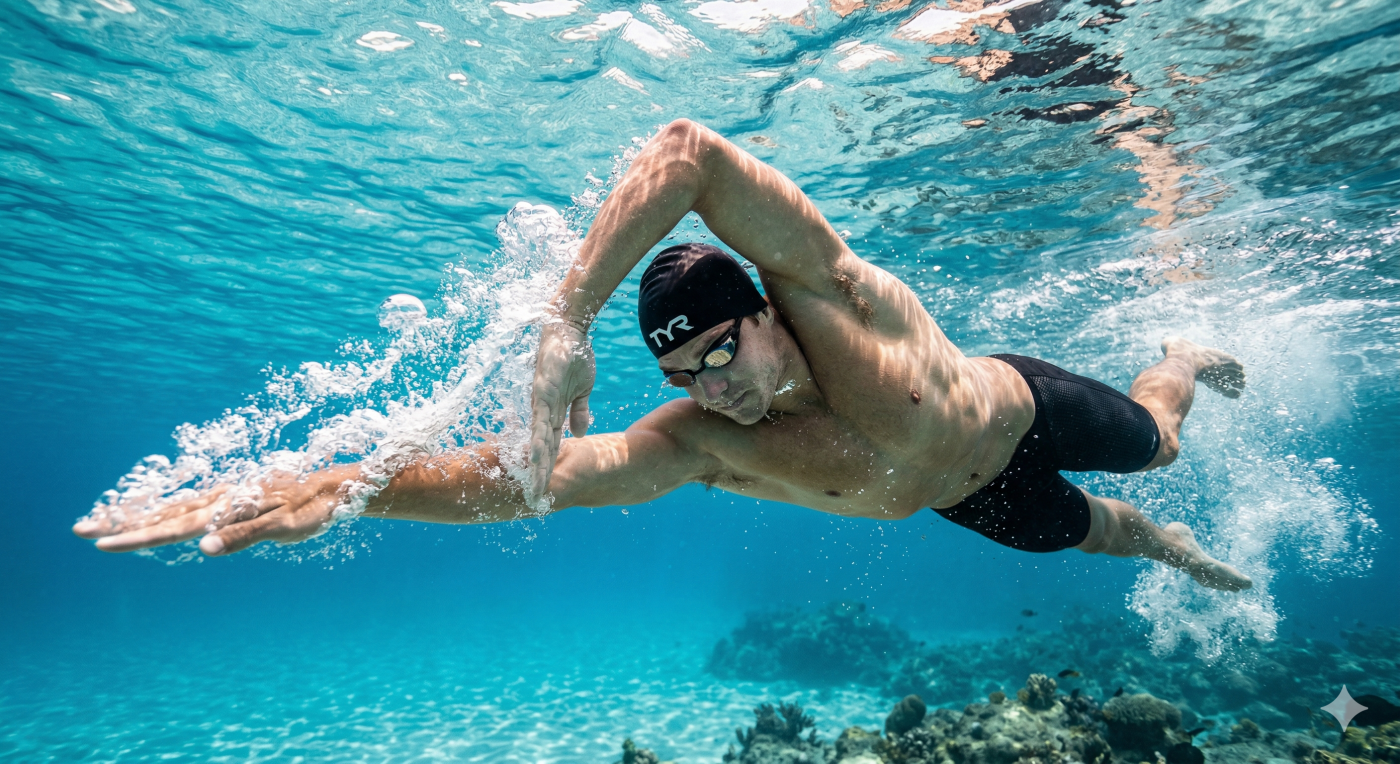
The 50-meter freestyle is often called the “splash and dash,” but for those of us who have lived our lives between the lane lines, we know it is anything but chaotic. It is a game of millimeters and milliseconds. You stand on the blocks, your heart hammering against your ribs, knowing that a single slip in your catch or a goggle seal that flickers for a fraction of a second will cost you the race.
One of the most common frustrations I hear from sprinters is the “plateau.” You’re strong, your turn is crisp, but you just can’t seem to drop that final half-second. Usually, the culprit isn’t your strength—it’s your stroke rate. If you are spinning your wheels without moving forward, or if your stroke is too long and lazy for a sprint, you are fighting the water instead of cutting through it.
To win, you need to master the internal mechanics of tempo. But as I’ve learned through years of competitive racing, even the most perfect stroke rate fails if your equipment creates unnecessary drag or, worse, leaks during the initial surge.
The Science of Stroke Rate: Finding Your Sprint Rhythm
In sprint freestyle, your stroke rate (the speed at which your arms complete a cycle) is the engine. However, there is a delicate balance between Stroke Rate (SR) and Stroke Length (SL). If you increase your rate but lose your “hold” on the water, you’re just splashing.
1. The High-Elbow Catch (EVF)
To maintain a high stroke rate without slipping, you must engage an Early Vertical Forearm (EVF). Imagine reaching over a large barrel. By getting your fingertips pointed toward the bottom of the pool early in the stroke, you turn your entire forearm into a paddle. This allows you to increase your tempo because you are moving a massive volume of water immediately.
2. The Kayak Principle
Think of your arms like a kayak paddle. In a sprint, there should be almost no “dead spots” in your stroke. As one hand finishes the push phase at the hip, the other should already be entering the water and starting the catch. This constant application of force keeps your body high on the surface, reducing frontal drag.
3. Training with a Tempo Trainer
To master this, I highly recommend using an underwater metronome (like a Finis Tempo Trainer). Set it to a challenging beep—say, 0.45 to 0.55 seconds per stroke—and try to keep up without letting your technique crumble. This builds the neurological pathways needed to “fire” your muscles faster during a race.
Why Your Gear is the Silent Partner in Your Speed
You can have the most efficient stroke rate in the world, but if your goggles are bulky, they create micro-turbulence. In a 50m sprint, that turbulence acts like a tiny parachute attached to your face. This is why elite sprinters move toward low-profile racing goggles.
At BestSwimGoggles.com, we take this seriously. My lead gear analyst, Vince Le, and our team of former competitive swimmers don’t just “try on” goggles. We put every pair through a 60-minute “High-Intensity Stress Test.” We perform explosive starts, 15-meter underwater power kicks, and max-effort sprints to see if the goggles vibrate, leak, or fog up when your body heat spikes. We are 100% independent; if a goggle doesn’t survive Peter’s 60-minute gauntlet, it doesn’t get our recommendation. For sprinting, we look for “socket-fit” designs that sit inside the eye orbital to minimize drag.
The Top Low-Profile Goggles for Sprinting
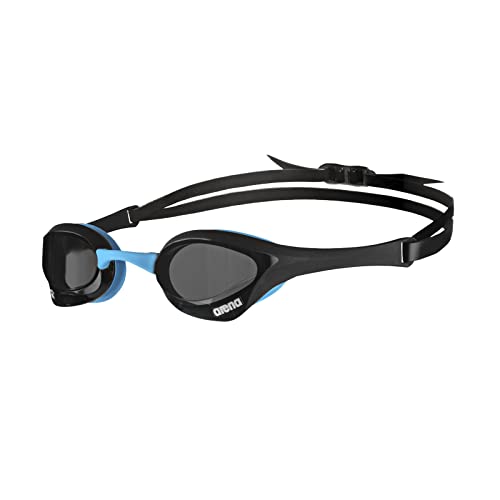
1. Arena Cobra Ultra Mirror Swipe
The Arena Cobra Ultra is the gold standard for hydrodynamics. Its iconic “blade” shape and extended side temples are designed specifically to stabilize the goggle during high-speed entries and turns.
The Specs: Features the revolutionary Swipe anti-fog technology and a super low-profile lens.
Pros: Incredible stability during dives; the lowest drag coefficient we’ve ever measured in the lab.
Cons: The fit is very aggressive; it might feel “tight” for those used to fitness goggles.
Who it’s for: The serious racer who wants the absolute fastest goggle on the market.
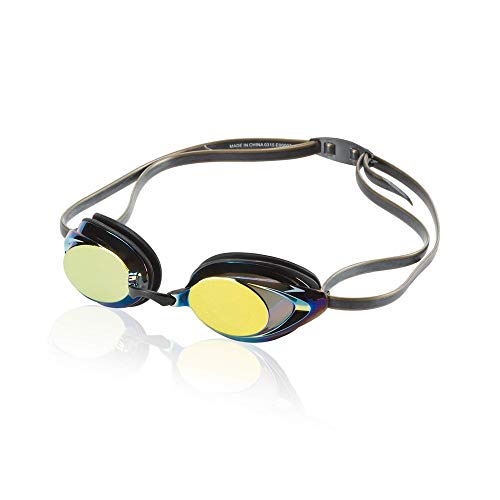
2. Speedo Mirrored Vanquisher 2.0
While slightly more cushioned than the Arena Cobra, the Vanquisher 2.0 remains the most popular low-profile goggle in the world. It sits snugly in the eye socket, providing a sleek profile without sacrificing comfort.
The Specs: 4 interchangeable nose pieces and a wide peripheral mirrored lens.
Pros: Reliable suction that almost never fails on a dive; great value for the price.
Cons: Does not feature the “Swipe” anti-fog, so you’ll need to maintain the coating carefully.
Who it’s for: Sprinters who need a custom, leak-proof fit for both training and race day.
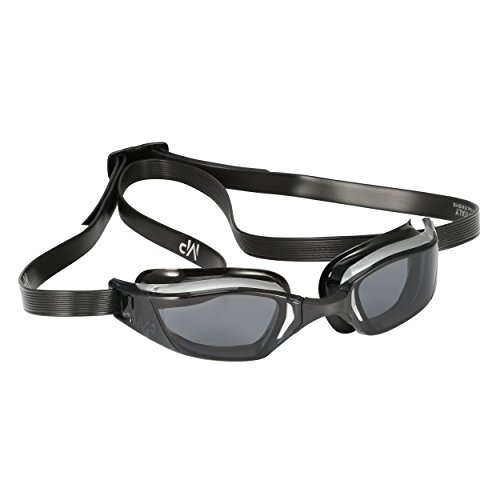
3. MP Michael Phelps XCEED
Designed by the greatest sprinter of all time, the XCEED goggles feature a patented curved lens that allows you to see the lane lines and the wall without moving your head, which is crucial for maintaining your stroke rate.
The Specs: Semi-rigid exoskeleton for structural integrity during fast turns.
Pros: Exceptional vertical and peripheral vision; very low profile.
Cons: The nose bridge can be tricky to swap out for some users.
Who it’s for: Swimmers who want a wide field of vision while maintaining a high-performance racing profile.
Lock in Your Focus
Mastering your stroke rate is a mental and physical game. It requires the discipline to train with a metronome and the wisdom to choose gear that doesn’t hold you back. When you step up to those blocks, you shouldn’t be worrying about your goggles leaking or your vision blurring. You should be thinking about one thing: the catch.
Get your gear right, find your rhythm, and let the scoreboard do the talking. I’ll see you at the wall.
Vince Le is a swim gear analyst and lead content editor at BestSwimGoggles.com. Combining years of competitive swimming experience with a deep passion for aquatic technology, Le delivers objective, in-depth reviews.
Disclaimer: BestSwimGoggles.com is part of the Amazon Associates Program. We may earn a commission if you make a purchase via our website, with no extra cost to you.


