
Parent Water Safety Guide
Parents can and should help children become comfortable around water, but formal swim lessons and active supervision still matter. The safest approach is not “parents or lessons.” It is parents teaching water confidence at home while trained instructors teach structured swimming skills.
This guide explains what parents can safely teach, where professional lessons are valuable, how to build confidence without pressure, and which basic swim gear helps children feel comfortable in the pool.
This article contains affiliate links. As an Amazon Associate, BestSwimGoggles.com may earn from qualifying purchases. This does not change the price you pay and does not control our editorial recommendations.
Parents Should Teach Water Confidence, Not Replace Supervision
Teaching a child to swim does not make them drown-proof. Children still need close, active supervision around pools, lakes, beaches, bathtubs and backyard water. Lessons, goggles and flotation toys are helpful, but they never replace an alert adult.
- Stay within arm’s reach for young or beginner swimmers.
- Use layers of protection like supervision, barriers and rules.
- Teach calm water habits before speed or distance.
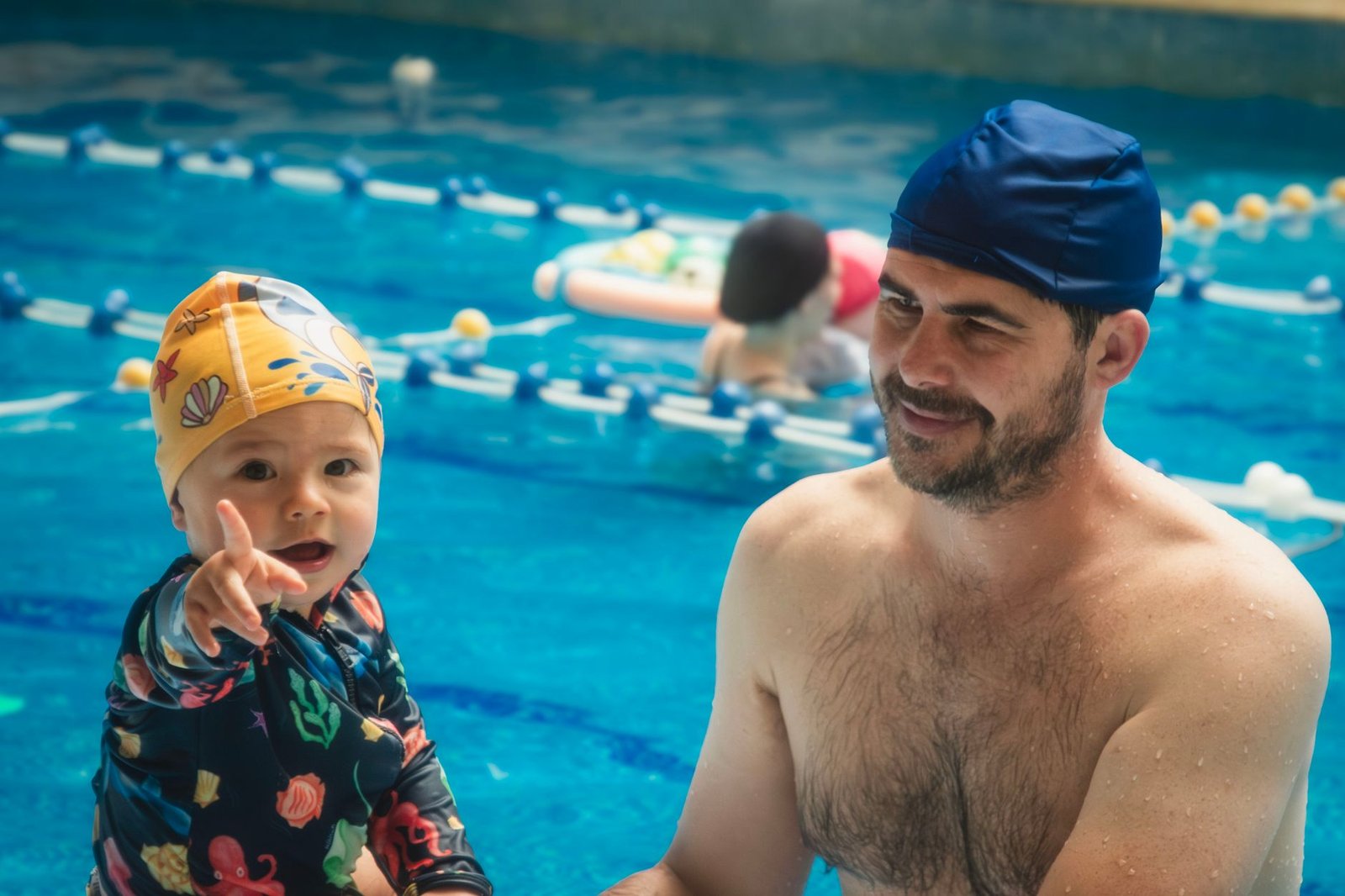
Quick Answer: Should Parents Teach Their Children to Swim?
Yes, parents should help children learn water comfort, safety rules, floating, kicking, blowing bubbles and calm pool behavior. However, professional swim lessons are still strongly recommended when possible because instructors can teach progression, technique, safety skills and confidence in a structured way.
A parent’s best role is to make water familiar, positive and safe. A swim instructor’s best role is to build skills step by step.
What Parents Can Safely Teach at Home or in the Pool
Parents are excellent first teachers for water comfort. The goal is not to force strokes early. The goal is to help children relax, listen, breathe calmly and enjoy being in the water.
Pool rules: walk near the pool, ask permission before entering, and never swim alone.
Face comfort: splash gently, blow bubbles and practice putting the chin or face in water.
Floating: support back floats and front floats calmly, without forcing fear.
Kicking: practice gentle flutter kicks while holding the wall or a kickboard.
Exit skills: teach children how to find the wall, ladder or pool steps.
Where Swim Lessons Help More Than Parent Teaching Alone
Many parents can teach basic comfort, but swim instructors add structure, progressions and outside authority. Children often respond differently to a teacher than to a parent.
| Skill Area | Parent Role | Instructor Role |
|---|---|---|
| Water comfort | Make pool time positive and familiar | Build confidence through structured activities |
| Breathing | Practice bubbles and calm face-in-water play | Teach breathing timing and progressive drills |
| Floating | Support relaxed floating | Reduce support step by step |
| Stroke basics | Encourage practice and consistency | Correct body position, arms, kick and timing |
| Safety skills | Repeat rules and supervise closely | Practice safe exits, rollovers and water confidence drills |
When Should Children Start Learning to Swim?
Children can begin getting comfortable around water early with parent supervision, but formal lesson readiness varies by age, temperament and development. Some children are ready for structured beginner lessons earlier than others. The right pace is the one that keeps your child safe, calm and willing to learn.
Comfort
Water play, songs, safe entry, parent support and simple rules.
Confidence
Bubbles, floating, kicking, wall holds and assisted movement.
Skill building
Beginner strokes, breath control, floating and safe exits.
Technique
Stroke refinement, endurance, turns and stronger water safety.
How Parents Can Make Swimming Less Scary
Fear is common. The worst response is forcing a child underwater or comparing them to siblings. Build trust first, then skills.
Helpful parent behaviors
- Stay calm and positive.
- Let the child progress gradually.
- Celebrate small wins.
- Use games to practice bubbles and kicking.
- End sessions before the child is exhausted.
Behaviors to avoid
- Forcing the face underwater.
- Throwing a child into the pool.
- Using fear as motivation.
- Ignoring crying or panic.
- Assuming one lesson means a child is safe alone.
Basic Gear That Helps Children Learn
Gear should support comfort and learning, not create false security. Goggles can help children open their eyes underwater, but they should also learn basic water comfort without relying on gear all the time.
| Gear | Why It Helps | Best Use | Check |
|---|---|---|---|
| Kids swim goggles | Reduces eye irritation and helps underwater confidence | Lessons and practice | Check |
| Junior goggles | Better fit for older kids and young swimmers | School-age swimmers | Check |
| Kickboard | Helps practice kicking and body position | Beginner drills | Check |
| Swim cap | Keeps hair out of face and can improve comfort | Lessons, long hair, swim team | Check |
| Pool toys | Makes water practice playful and less intimidating | Confidence games | Check |
A Simple Parent-Led Swim Practice Plan
Keep parent-led practice short and positive. Ten to fifteen minutes of calm practice is often better than a long session that ends in frustration.
Enter the water calmly, review pool rules and hold the wall.
Practice bubbles, gentle splashing and face comfort.
Practice supported front float or back float.
Kick while holding the wall or a kickboard.
Practice finding the wall, ladder or steps.
End with an easy game so the child leaves confident.
Water Safety Rules Every Child Should Know
Teach these early and repeat often:
- Never swim without an adult watching.
- Ask permission before entering the water.
- Walk near the pool.
- Do not push others into water.
- Stay where you can touch or where an adult says it is safe.
- Know how to find the wall, steps or ladder.
- Call for help if someone is in trouble—do not jump in without an adult.
Common Parent Mistakes
Forcing progress too fast
Fear slows learning. Build comfort before expecting strokes.
Assuming goggles equal confidence
Goggles help, but children still need water comfort and safety skills.
Using flotation toys as supervision
Gear can fail or slip. Active adult supervision is still required.
Teaching only forward swimming
Children also need floating, turning around, and finding an exit.
Comparing siblings
Every child develops water confidence at a different pace.
Stopping lessons too soon
One short lesson block may not be enough for lasting skill and confidence.
Frequently Asked Questions
Should parents teach their children to swim?
Yes. Parents should teach water comfort, safety rules and basic confidence, but professional swim lessons are helpful for structured skill development and technique.
Can parents teach swimming without lessons?
Parents can teach many basics, but lessons are recommended when possible because trained instructors can build skills progressively and correct technique more effectively.
What should parents teach first?
Start with pool rules, water comfort, blowing bubbles, holding the wall, supported floating, gentle kicking and safe exits.
Should children wear goggles while learning to swim?
Goggles can help children open their eyes underwater and feel more comfortable, but they should also learn basic safety and comfort without relying completely on goggles.
How can I help a child who is afraid of water?
Go slowly, keep sessions playful, avoid forcing the face underwater, celebrate small steps and consider a patient beginner swim instructor.
Does knowing how to swim make a child safe alone in water?
No. Swimming ability lowers risk but does not remove danger. Children still need close adult supervision and clear water safety rules.
Final Takeaway
Parents should absolutely help children learn to swim, but the safest approach combines parent support, professional lessons when possible, repeated water safety rules and active supervision. Teach confidence first, then skills, then technique.
Keep water practice calm and positive. A child who trusts the water, listens to rules and enjoys learning is more likely to become a confident swimmer.
