
Freestyle Technique Clinic
Swimming faster with longer strokes does not mean stretching your arm forward and gliding until you slow down. It means covering more distance with each effective stroke while keeping rhythm, balance and propulsion.
This guide breaks down distance per stroke, catch quality, body line, rotation, kick timing and stroke rate so you can become more efficient without turning your freestyle into a slow, over-glided stroke.
This article contains affiliate links. As an Amazon Associate, BestSwimGoggles.com may earn from qualifying purchases. This does not change the price you pay and does not control our editorial recommendations.
Distance per stroke
Move farther with each pull.
Catch quality
Hold water before pulling.
Body line
Reduce drag instead of fighting it.
Stroke rhythm
Stay long without losing tempo.
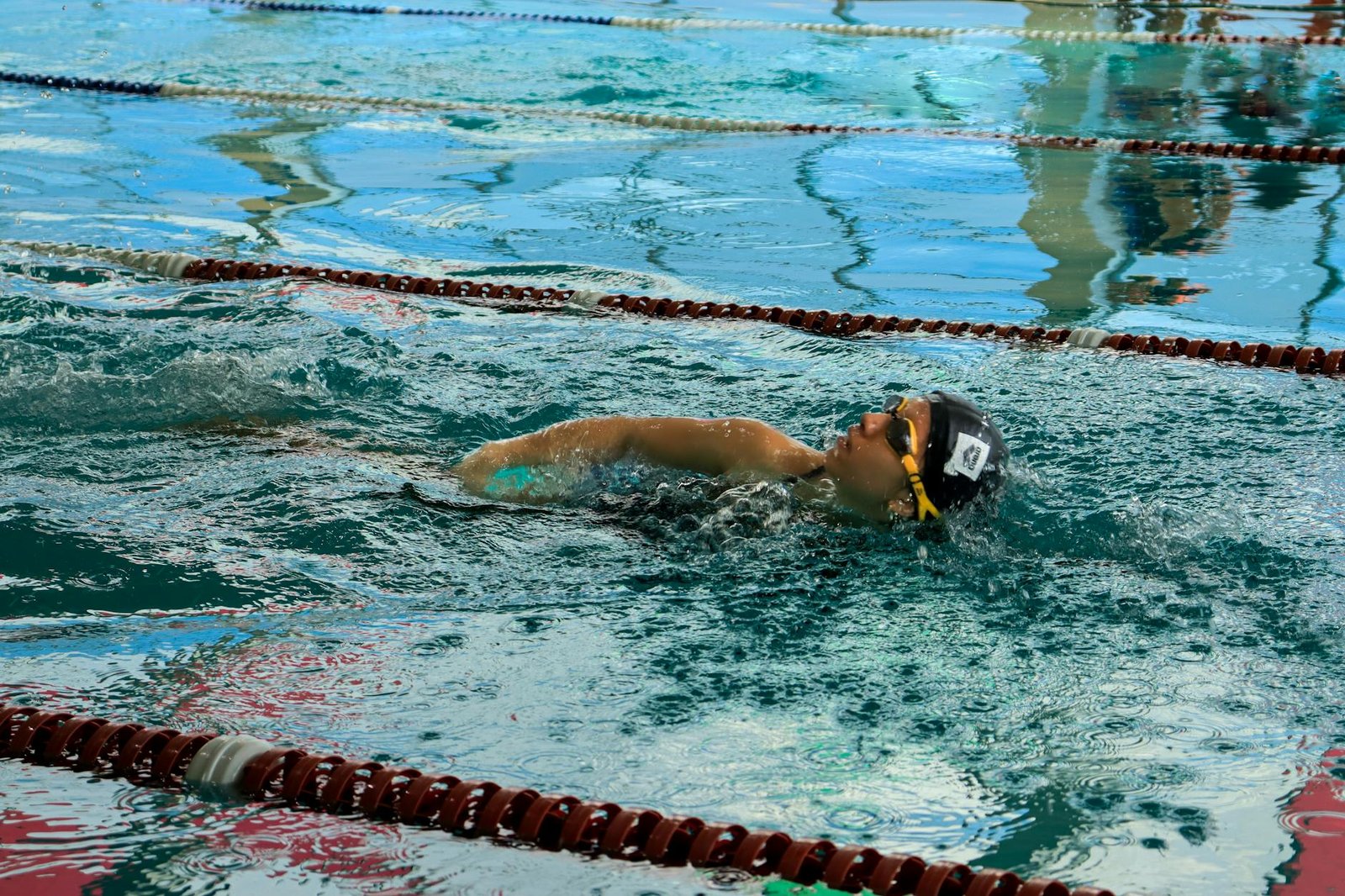
Quick Answer: How Do You Swim Faster With Longer Strokes?
To swim faster with longer strokes, improve your body position, keep your head low, rotate from the hips and torso, extend forward without overreaching, catch the water early, pull with a high elbow, and finish each stroke with controlled acceleration. Count your strokes per length, but do not reduce stroke count by slowing down too much.
The goal is not “fewer strokes at any cost.” The goal is:
- More distance per stroke.
- Less drag between strokes.
- Better catch and pull.
- Smoother rotation.
- Stable kick timing.
- A stroke rate you can sustain.
The Stroke Length Trap: Longer Is Not Always Faster
Many swimmers hear “take longer strokes” and start gliding too much. That can lower stroke count, but it may also slow the swimmer down. Good stroke length should come from efficient propulsion and low drag, not from pausing at the front of the stroke.
Do This
- Reach forward with a relaxed shoulder.
- Enter cleanly and catch water early.
- Rotate the body to lengthen the stroke.
- Keep pressure on the water through the pull.
- Maintain a smooth rhythm.
Avoid This
- Over-gliding until momentum dies.
- Crossing over the centerline.
- Dropping the elbow during the catch.
- Lifting the head to breathe.
- Forcing long strokes with stiff shoulders.
What “Distance Per Stroke” Really Means
Distance per stroke is how far you travel with each stroke cycle. A swimmer with good distance per stroke does not simply move slowly; they move efficiently. They create propulsion with the catch and pull while reducing drag from poor body position.
Simple Stroke Efficiency Formula
Better stroke efficiency = good catch + low drag + controlled rhythm
If any part is missing, longer strokes may not make you faster. A long stroke with a weak catch is just a long movement through the water.
| What You Notice | Likely Problem | What to Fix |
|---|---|---|
| You take many strokes per length | Short pull, drag or poor body line | Improve catch, streamline and rotation |
| You take fewer strokes but swim slower | Over-gliding | Keep rhythm and avoid long pauses |
| Your arm slips through the water | Weak catch | Practice sculling and high-elbow catch |
| Your legs sink | Head too high or weak body line | Lower head, engage core and exhale steadily |
| You get tired quickly | Fighting water instead of moving through it | Reduce drag and relax recovery |
Step 1: Fix Body Position Before You Pull Harder
Long strokes are easier when your body is high and balanced. If your legs sink, every pull has to fight drag. That makes your stroke shorter, heavier and less efficient.
Head
Look slightly down and forward. Lifting your head can drop your hips.
Hips
Keep hips close to the surface so the body moves as one line.
Core
Use the core to hold alignment instead of letting the body snake side to side.
Kick
Use a steady kick that supports body position without wasting energy.
Step 2: Build a Better Catch
The catch is where the stroke begins to create real forward movement. If your hand slips down or presses water in the wrong direction, you can move your arm a long way without gaining much distance.
Catch Cue
After your hand enters, think “hold the water” before pulling. Keep the elbow higher than the hand and press water back, not down.
| Drill | Purpose | How It Helps Longer Strokes |
|---|---|---|
| Front scull | Feel pressure on the hands and forearms | Improves awareness of the catch |
| Single-arm freestyle | Focus on one pull at a time | Reveals weak catch or poor rotation |
| Fist drill | Use forearms, not just palms | Improves feel for water |
| Catch-up drill | Practice extension and timing | Can help length, but avoid over-gliding |
| Paddle pull | Add feedback and resistance | Shows whether your pull path is stable |
Step 3: Use Rotation to Make the Stroke Longer
Good freestyle length comes from body rotation, not just reaching with the arm. When your torso rotates smoothly, the shoulder can extend naturally and the pulling arm can connect to the larger muscles of the back.
Too flat
Shorter reach, shoulder strain and weak pull connection.
Too much rotation
Body rolls too far, rhythm breaks and the kick may become unstable.
Just right
Controlled rotation, easier breathing and a longer connected pull.
Step 4: Count Strokes Without Becoming Obsessed
Stroke count is useful, but it can become misleading. The goal is not always the lowest possible number. A swimmer who takes 14 strokes slowly is not automatically better than a swimmer who takes 17 strokes quickly with strong rhythm.
Try This 4-Length Test
- Swim one easy 25 and count strokes.
- Swim one 25 focusing on body line and long reach.
- Swim one 25 focusing on catch pressure.
- Swim one 25 trying to keep length while slightly increasing tempo.
Compare both stroke count and time. The best result is the one that balances fewer wasted strokes with sustainable speed.
Step 5: Keep the Kick Small and Useful
A bigger kick is not always faster. For many swimmers, a relaxed and consistent kick supports body position, timing and rotation. If your kick is too wide, it can increase drag and break your line.
Better kick cues:
- Kick from the hips, not only the knees.
- Keep the kick narrow inside the body line.
- Use flexible ankles when possible.
- Match kick rhythm to stroke rhythm.
- Do not let the kick destroy breathing timing.
Recommended Gear for Stroke-Length Training
You can improve stroke length without gear, but a few tools can provide useful feedback. Use gear to learn better mechanics, not to hide technique problems.
| Tool | Best For | How It Helps | Check |
|---|---|---|---|
| Swim paddles | Catch awareness | Make weak pull paths easier to feel | Check Paddles |
| Pull buoy | Body position and pull focus | Lets you isolate upper-body mechanics | Check Pull Buoy |
| Swim snorkel | Head position and alignment | Removes breathing disruption while you work on stroke length | Check Snorkel |
| Kickboard | Kick rhythm | Helps isolate leg timing and body control | Check Kickboard |
| Tempo trainer | Stroke rate control | Helps avoid over-gliding while improving stroke length | Check Tempo Trainer |
| Comfortable goggles | Technique focus | Clear vision and no leaks reduce distractions | Check Goggles |
Sample Workout: Longer Strokes Without Over-Gliding
Use this workout when you want to improve distance per stroke while keeping speed and rhythm.
4 x 50 easy freestyle, count strokes on the second 25 of each 50.
4 x 25 front scull + easy swim, focus on feeling water pressure.
6 x 50 freestyle: odd lengths focus on body line, even lengths focus on catch.
6 x 25 moderate pace. Try to keep stroke count stable while slightly improving time.
100 easy swim, relaxed breathing and long smooth strokes.
If stroke count drops but time gets much slower, you are probably over-gliding. Add a little tempo back.
Common Mistakes That Shorten Your Stroke
Crossing over
Your hand enters across the centerline, causing drag and poor alignment.
Dropping the elbow
A dropped elbow makes the pull slip instead of pushing water back.
Over-gliding
Pausing too long in front can kill momentum and make you slower.
Lifting the head
Looking too far forward can drop the hips and increase drag.
Wide kick
A wide kick acts like a brake and breaks your streamline.
Pulling harder too soon
Power without catch quality often wastes energy instead of increasing speed.
Frequently Asked Questions
Do longer strokes make you swim faster?
Longer strokes can make you faster if they come from better catch, body position and lower drag. They can make you slower if you over-glide or reduce stroke rate too much.
How do I increase distance per stroke?
Improve body line, reduce drag, rotate smoothly, catch water early and pull with a high elbow. Count strokes per length while also tracking your time.
What is a good stroke count for freestyle?
A good stroke count depends on pool length, height, skill and speed. Instead of chasing a universal number, compare your own stroke count and time over repeat swims.
What drills help swimmers take longer strokes?
Front scull, single-arm freestyle, fist drill, catch-up drill and controlled paddle work can help improve catch, feel for water and stroke length.
Can swim paddles help with longer strokes?
Swim paddles can help you feel the catch and pull path, but they should be used carefully. Poor technique with paddles can add shoulder stress.
Should beginners focus on stroke length or speed first?
Beginners should first focus on relaxed breathing, body position and basic stroke control. Stroke length and speed improve more naturally after those basics are stable.
Final Takeaway
To swim faster with longer strokes, do not simply reach farther and glide. Build a better catch, reduce drag, use body rotation, keep a narrow supportive kick and maintain enough stroke rhythm to keep momentum.
The best long stroke is not the slowest stroke. It is the stroke that moves you farther through the water with less wasted energy while still keeping your speed.
