
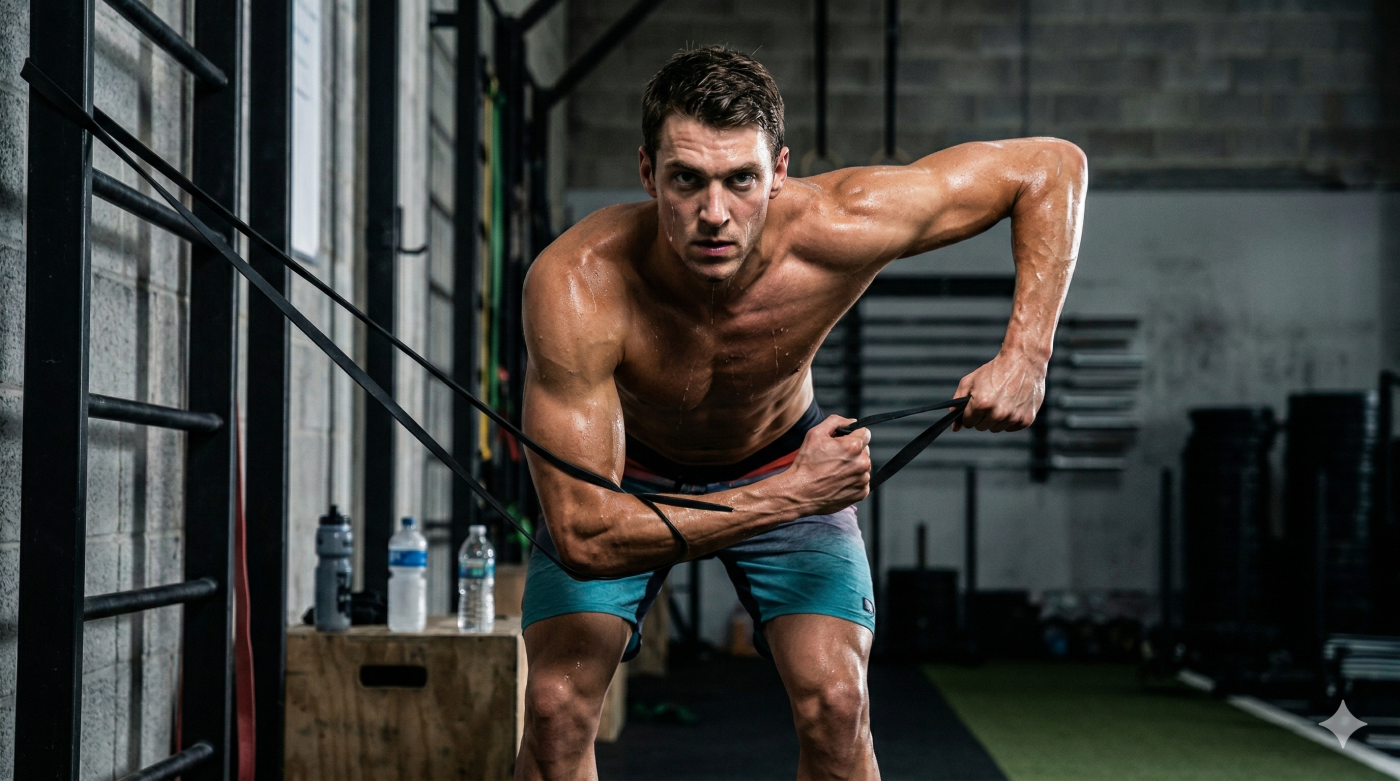
If you want to explode off the blocks and hold a 0.45-second stroke rate, you cannot rely on pool time alone. Gravity is your greatest coach. In my years of sprinting, the difference between a podium finish and “just another heat” was always the work I did on the pool deck and in the weight room.
The 50m and 100m freestyle are power events. You need “twitch” fibers that fire like a piston. But here’s the problem: most swimmers over-train in the water and under-train their functional strength, leading to “swimmer’s shoulder” and a plateau in speed. To break 25 seconds (or 22 for the elite), your dryland training must mimic the high-tension mechanics of the sprint pull.
The Power of Dryland: Building a “Land-Based” Engine
While YourSwimLog often discusses the philosophy of training, I want to give you the exact “Power-to-Water” blueprint. We aren’t training to be bodybuilders; we are training to be hydrodynamically explosive.
1. Resistance Band Pulls (The Sprint Mimic)
This is the single most important dryland exercise. Attach a high-quality resistance band to a pole. Lean forward, maintain a flat back, and perform a high-elbow catch and pull. Focus on the “snap” at the finish of the stroke. This builds the specific lat and tricep strength needed to maintain your tempo when the lactic acid hits at 35 meters.
2. Explosive Medicine Ball Slams
Sprinting is about core stability. When you slam a medicine ball into the ground, you are training your abdominal muscles to “lock” your torso. In the water, this translates to a rock-solid body position that doesn’t “wiggle” during high-intensity kicking.
3. Box Jumps for Block Power
Your race starts on land. Explosive box jumps build the fast-twitch fibers in your glutes and quads. A powerful jump doesn’t just give you a better lead; it sets the tone for your underwater dolphin kick—the “fifth stroke” of swimming.
Why Your Training Gear Dictates Your Recovery
You can put in the hardest dryland session of your life, but if you show up to the pool the next morning with stiff lats and sore shoulders, your technique will suffer. At BestSwimGoggles.com, I don’t just test what goes on your eyes; I test how gear impacts your overall performance.
My colleague Peter Parker and I have spent over 60 minutes evaluating recovery tools and training aids to see which ones actually help a sprinter return to “race-ready” status faster. If your recovery gear fails, your next pool session is wasted. We look for durability, ease of use, and physiological impact. We are 100% independent, ensuring our recommendations are based on performance, not marketing.
Essential Gear for the Sprint-Focused Swimmer
1. Sportneer Deep Tissue Massage Gun
After a heavy dryland session involving pull-ups and band work, your lats will be tight. A percussive massage gun is essential for “flushing” the muscles before you hit the water. It increases blood flow to the shoulders and is compact enough for any swim bag.
2. TYR Resistance Pull Buoy
Transitioning dryland strength to the water requires isolation. Using a high-buoyancy pull buoy allows you to focus 100% on the “Power Pull” mechanics we built in the gym. It keeps your hips high and is made of durable EVA foam that doesn’t degrade in chlorine.
3. Speedo Mirrored Vanquisher 2.0
Even during dryland-heavy weeks, you need a goggle that works every time. The Vanquisher 2.0 is the most reliable tool in my bag for high-intensity sets. It offers a precision fit and doesn’t leak even when your face is tired from a heavy gym session.
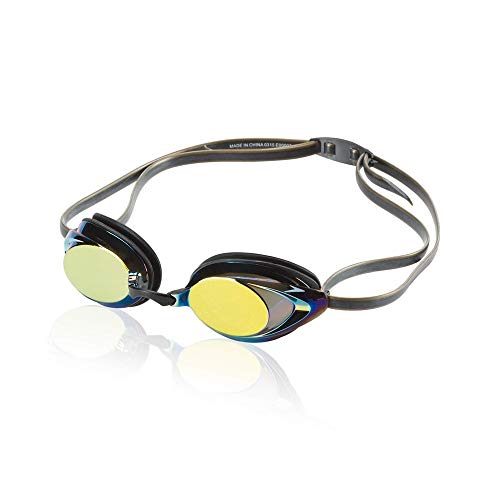
Speedo Unisex-Adult Swim Goggles Mirrored Vanquisher 2.0
Train Like a Sprinter, Recover Like a Pro
The weight room is where you build the engine, but the pool is where you refine it. By integrating explosive dryland movements with high-quality recovery gear, you create a feedback loop of constant improvement. Don’t just be a swimmer. Be an athlete who happens to swim fast. I’ll see you in the gym (and at the pool).
For competitive sprinters, 3 sessions per week focusing on explosive power is the sweet spot. If you are a fitness swimmer looking to improve your stroke, 2 sessions are enough to build functional strength without causing excessive muscle fatigue before your pool workouts.
This is a common myth. If you focus on functional movements like pull-ups, squats, and resistance band work, you will build “lean power.” Bulk only becomes an issue if you train like a bodybuilder with extreme hypertrophy goals. Sprinting requires fast-twitch muscle fibers, which are built through explosive, low-repetition movements.
Shoulder pain usually stems from poor mechanics or using a band that is too heavy. Ensure you maintain a “high-elbow” catch and keep your shoulders depressed (away from your ears). Start with a light tension band to master the “path of the pull” before moving to higher resistance.
If your priority is technical precision and speed in the pool, swim first. If your priority is building raw maximum strength, do dryland first. However, never perform a heavy lifting session immediately before a high-intensity sprint swim, as fatigued muscles lead to stroke disintegration.
A massage gun doesn’t directly make you faster, but it accelerates recovery. By reducing muscle knots and increasing blood flow after a dryland session, you can enter the pool the next day with “fresh” muscles. Pliable, relaxed muscles have a much better “feel” for the water than stiff, sore ones.


