
Swim Turn Dryland Clinic
Fast swim turns are not only about what happens at the wall. The best turns combine a quick approach, compact tuck, explosive push-off, tight streamline and controlled breakout. Dryland training can build the strength, power and body control needed for each part.
This guide turns dryland work into a practical swim-turn system: what to train, how each exercise transfers to the wall, how to avoid common mistakes, and how to build a simple weekly routine.
Hold speed into the wall without lifting your head or losing line.
Use core control to rotate quickly and place the feet cleanly.
Drive through hips, knees and ankles with full-body tension.
Hold a tight body line so the push-off speed is not wasted.
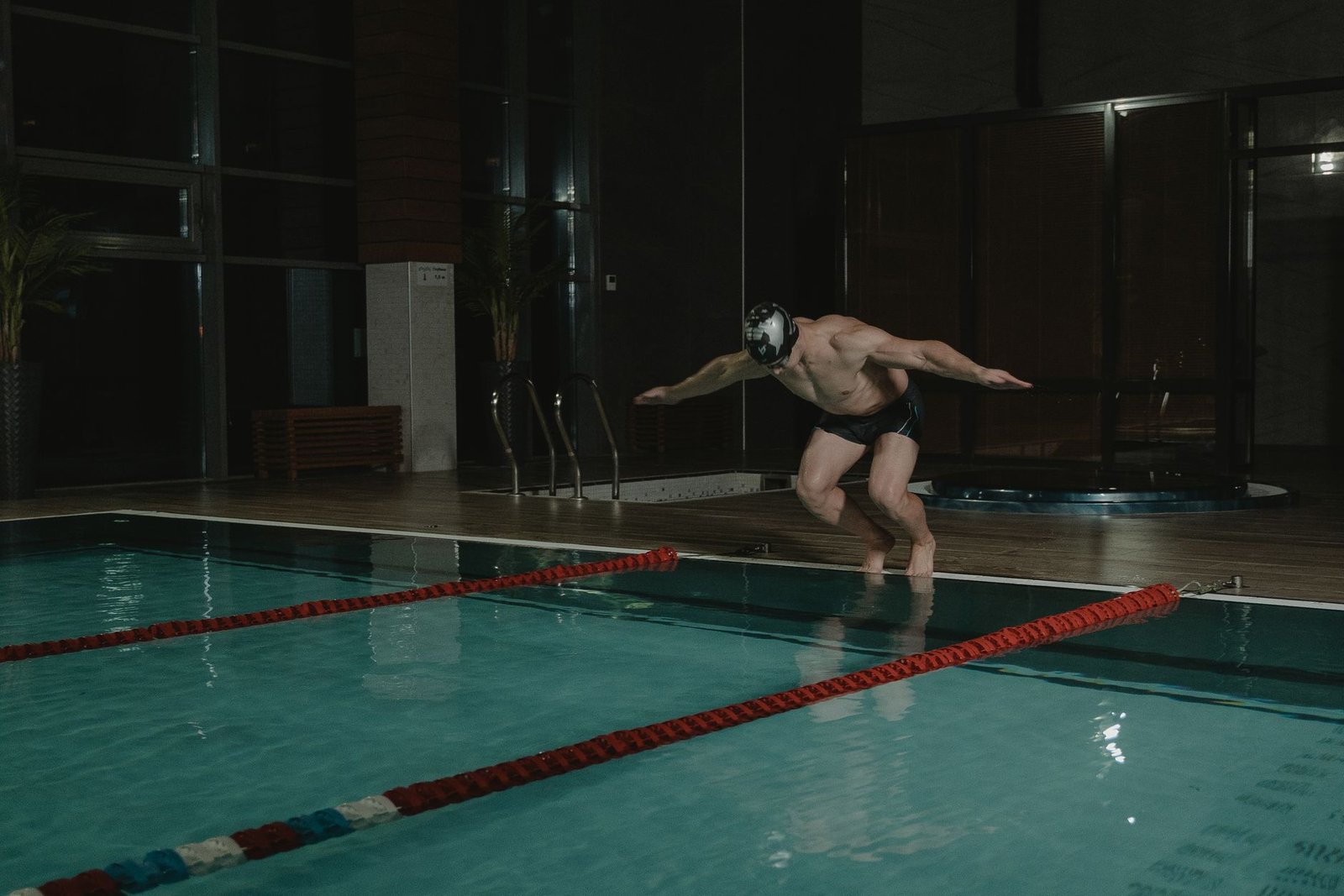
Quick Answer: What Dryland Exercises Improve Swim Turns?
The best dryland exercises for better swim turns are squats, squat jumps, depth jumps, Swiss ball knee tucks, planks, jump rope, wall sits and resistance-band streamline work. Together, they train the push-off, wall contact speed, compact tuck, core stability and tight streamline needed for faster turns.
Fast Turn Formula
Fast turn = compact tuck + strong wall push + tight streamline + clean breakout
How Dryland Training Transfers to Swim Turns
A swim turn is a short explosive movement. You approach the wall at speed, fold the body quickly, plant the feet, push off hard, and hold a streamlined position while carrying momentum into the breakout. Dryland helps because it trains the pieces that are hard to overload in the water.
Lower-body strength
Helps generate a stronger push-off from the wall.
Explosive power
Helps reduce the time between foot plant and wall exit.
Core control
Helps you tuck, rotate and hold a tight streamline.
Ankle stiffness
Helps you push off crisply and stay light on the wall.
Best Dryland Exercises for Faster Swim Turns
| Exercise | Turn Benefit | Best For | Starter Dose |
|---|---|---|---|
| Squats | Wall push-off strength | All swimmers | 3 x 6–8 controlled reps |
| Squat jumps | Explosive power | Intermediate swimmers | 4 x 4 quality jumps |
| Depth jumps | Shorter wall contact time | Advanced swimmers | 3 x 3 from a low box |
| Swiss ball knee tucks | Compact tuck and core control | Flip turns | 3 x 8 controlled reps |
| Jump rope | Ankle stiffness and rhythm | Activation and conditioning | 5 rounds: 30 sec on / 30 sec off |
| Streamline holds | Body line off the wall | All turns | 4 x 20–30 sec |
1. Squats: Build the Push-Off Engine
Squats train the same major joints you use when pushing off the wall: hips, knees and ankles. You do not need to lift heavy immediately. Beginners can start with bodyweight squats and focus on control, balance and knee tracking.
Coach cue
Think “plant, brace, drive.” A good wall push-off feels like a powerful squat pattern turned sideways in the water.
2. Squat Jumps: Turn Strength Into Power
Squat jumps help you express force quickly. Keep the reps low and the quality high. The goal is not to get tired; the goal is to jump explosively, land quietly and reset before the next repetition.
Do
- Land softly.
- Keep knees aligned with toes.
- Reset between reps.
- Stop when jump height drops.
Do not
- Rush sloppy reps.
- Let knees collapse inward.
- Do high-volume jumps when tired.
- Use jumps as punishment conditioning.
3. Depth Jumps: Train Fast Wall Contact
Depth jumps are useful because fast turns depend on how quickly you can absorb contact and reapply force. Start low, land well and keep the volume small. These are advanced compared with regular squat jumps.
Safety note
Skip depth jumps if you have knee, ankle, Achilles or landing-control issues. Use squat jumps, step-ups or low-impact strength work instead.
4. Swiss Ball Knee Tucks: Improve the Turn Tuck
A quick tuck helps swimmers rotate and place the feet efficiently. Swiss ball knee tucks train core stability while the knees move toward the chest, making them a useful dryland drill for flip-turn control.
Start in a plank with feet on the ball.
Brace the core before moving.
Pull knees toward the chest under control.
Extend back without letting the hips sag.
5. Jump Rope: Build Light Feet and Ankle Rhythm
Jump rope is simple, affordable and useful for swimmers who want quicker feet, stronger ankles and better coordination. It also works well as a short dryland warm-up before turn-focused swim sessions.
6. Streamline Holds: Stop Wasting the Push-Off
A strong push-off is wasted if your body opens up immediately. Dryland streamline holds teach shoulder mobility, core tension and body-line awareness. Add resistance bands if you want more feedback.
Streamline checklist
- Hands locked overhead.
- Head tucked between arms.
- Ribs down and core tight.
- Glutes lightly engaged.
- Body long, narrow and still.
Sample 20-Minute Dryland Turn Workout
Use this once or twice per week after a general warm-up. Keep reps sharp. Dryland for turns should improve power and control, not leave you too sore to swim well.
3 minutes easy jump rope or dynamic mobility.
3 x 6 bodyweight or goblet squats.
4 x 4 squat jumps, full reset between sets.
3 x 8 Swiss ball knee tucks or slow mountain climbers.
4 x 20–30 seconds streamline holds.
Light calf, hip flexor and shoulder mobility.
How to Connect Dryland to Pool Turns
Dryland only matters if it improves what you do in the pool. After a dryland block, practice turn skills while fresh enough to move well.
Wall plant
Practice placing both feet quickly and evenly on the wall.
Explosive push
Use the squat-jump feeling to drive off the wall.
Tight line
Hold streamline before starting the breakout.
Breakout timing
Do not rush the first stroke if speed is still high off the wall.
Common Mistakes
Too much plyometric volume
Jump quality matters more than doing dozens of tired reps.
No pool transfer
Dryland helps most when followed by turn practice in the water.
Weak streamline
A strong push-off is wasted if the body opens up immediately.
Depth jumps too early
Advanced plyometrics require good landing mechanics first.
Only training legs
Fast turns also require core control and shoulder mobility.
Training to exhaustion
Turn dryland should build speed and power, not destroy swim quality.
Frequently Asked Questions
What dryland exercises improve swim turns?
Squats, squat jumps, depth jumps, Swiss ball knee tucks, jump rope and streamline holds are useful because they train push-off force, power, compact tucking and body-line control.
How often should swimmers do dryland for turns?
One to two short sessions per week is enough for many swimmers. Quality and consistency matter more than long exhausting workouts.
Are depth jumps safe for swimmers?
Depth jumps can be useful for advanced swimmers with good landing mechanics, but beginners should start with squats, step-ups and squat jumps first.
Do stronger legs make swim turns faster?
Stronger legs can improve push-off force, but fast turns also depend on wall timing, compact body position, streamline quality and breakout technique.
Can dryland replace practicing turns in the pool?
No. Dryland supports the strength and power behind a turn, but swimmers still need pool practice to improve timing, foot placement, rotation and breakout.
What is the best beginner dryland exercise for swim turns?
Bodyweight squats, streamline holds and slow mountain climbers are good beginner options because they build strength and control with lower impact.
Final Takeaway
Dryland exercises can improve swim turns when they target the right qualities: leg strength, explosive power, compact tucking, core stability, ankle rhythm and streamline control. Start with controlled strength work, add small doses of power training, and always connect dryland gains back to pool turn practice.
The fastest turns are not just powerful. They are clean, compact and efficient from the approach into the breakout.
